Tuesday, April 15, 2014

April 15th, a Significant Day (Redux)

We Americans stupidly recognize this day as the day taxes are due. So we emphasize money and materialism over greatness of mind and soul, greatness that was both a product of and an influence upon the nation. Taxes are trivial compared to what happened on this day in 1865. President Lincoln was shot by Booth on Good Friday, April 14, 1865 and died the next morning. Secretary of State Seward was brutally assaulted as was his son. There is good evidence that General Grant was stalked to his train the same night by the conspirators. This occurred 5 days after Lee's surrender at Appomattox and doomed the South to a reconciliation with the North shepherded by the usual political wolves. More importantly it deprived the nation and politics of the high standard of mind and spirit Lincoln embodied.

Tolstoy on Lincoln:
“.... how largely the name of Lincoln is worshiped throughout the world and how legendary his personality has become. Now why was Lincoln so great that he overshadows all other national heroes? He really was not a great general like Napoleon or Washington; he was not such a skillful statesman as Gladstone or Frederick the Great; but his supremacy expresses itself altogether in his peculiar moral power and in the greatness of his character.

“Washington was a typical American. Napoleon was a typical Frenchman, but Lincoln was a humanitarian as broad as the world. He was bigger than his country — bigger than all the Presidents together.

“We are still too near to his greatness,” Tolstoy concluded, “but after a few centuries more our posterity will find him considerably bigger than we do.

“His genius is still too strong and too powerful for the common understanding, just as the sun is too hot when its light beams directly on us.”

Monday, April 14, 2014

A Gap in More than Wages

"Today, women make up about half our workforce. But they still make 77 cents for every dollar a man earns. That is wrong, and in 2014 it's an embarrassment. A woman deserves equal pay for equal work. She deserves to have a baby without sacrificing her job." Thus spake Obama in the State of the Union Address in 2014. He reiterated this position recently in a weekend address.

Yet in 2009, the U.S. Department of Labor found that, after controlling for education and job differences, the gender "wage gap" shrank to only 95% and much of the difference was attributed to personal choices: "A greater percentage of women than men tend to work part-time. Part-time work tends to pay less than full-time work. A greater percentage of women than men tend to leave the labor force for childbirth, childcare and elder care....Some of the wage gap is explained by the percentage of women who were not in the labor force during previous years, the age of women, and the number of children in the home....Women, especially working mothers, tend to value 'family friendly' workplace policies more than men. Some of the wage gap is explained by industry and occupation, particularly, the percentage of women who work in the industry and occupation."

More, much of the literature, including the Bureau of Labor Statistics Highlights of Women's Earnings, focus on wages rather than total compensation which misses a lot of the motivation for women seeking work. "Research indicates that women may value non-wage benefits more than men do, and as a result prefer to take a greater portion of their compensation in the form of health insurance and other fringe benefits," again the Department of Labor.

Some politicians rise above criticism or close analysis. For some reason we give leaders a break; Tonkin aside, we never see our leaders as opposed to our better interests. But this kind of repetitive insincerity must, at some point, be dealt with. This is simple agitprop, "The twin strategies of agitation and propaganda," so typical of self centered dictatorships. And facile street organizers. When seen in conjunction with speeches like Obama's Stafford Act Speech at Hampton University (http://steeleydock.blogspot.com/2012/10/obama-as-higgs-particle.html), what might be excused as an abberaton appears to be more of a technique.

Saturday, April 12, 2014

Cab Thoughts 4/11/14

"There is only one difference between a bad economist and a good one: the bad economist confines himself to the visible effect; the good economist takes into account both the effect that can be seen and those effects that must be foreseen. Yet this difference is tremendous; for it almost always happens that when the immediate consequence is favorable, the later consequences are disastrous, and vice versa. Whence it follows that the bad economist pursues a small present good that will be followed by a great evil to come, while the good economist pursues a great good to come, at the risk of a small present evil."
- From an essay by Frédéric Bastiat in 1850, "That Which Is Seen and That Which Is Unseen"

The State Department’s Inspector General Steve Linick warned “significant financial risk and a lack of internal control at the department has led to billions of unaccounted dollars over the last six years.

So the U.S. is now upset over the word "bossy." A lot of celebrities certainly are and I suppose that proves it. It seems some think this is a criticism of young girls that cramps their development. We have begun banning words, can thoughts and beliefs be far behind? Not so far fetched with the recent resignation of Brendan Eich, the CEO of Mozilla. Eich contributed to the Proposition 8 campaign in California in an attempt to outlaw gay marriage 6 years ago. This was a legal question and legitimate debate--and, incidentally, Obama was opposed to gay marriage at the time. Because of the revelation of that position, Eich was forced out. (In fairness, this was not entirely political but economic as people threatened boycott of the company.)
But "bossy, " like the dreaded "N word," shows a willingness toward censorship, remarkably prominent in the entertainment/artistic industry. Anyway, anything that attacks a tenet of "Peanuts" cannot be of value.

DNA introduces information into nature.

Fairness is a complicated notion. Does the soldier under fire for his country think the grocer at home is doing his fair share? Does the farmer think the local drunkard is? What about the ICU nurse on a 12 hour shift; does she think the tenured professor teaching one hour a week is?
There's a big difference between getting your fair share and doing your fair share but it seems reasonable that the opening of one door opens the other. And receiving a fair share can be achieved by force while contributing a fair share can only be encouraged.
 
 
The first two Iranian oil leases went to......Russia and China.
 
 
Rep. Daniel Sickles of New York, a decorated soldier who fought at Gettysburg, killed his wife's lover, Philip Keys (the son of Francis Scott Keys) and was acquitted with America's first successful temporary insanity defense.

Drama: As standards become more individualized, so do ideals. Drama is difficult without some ideal so, with declining standards, drama becomes less universal, more particular and tribal. Since the drama may not involve the audience, it must become more intense to be of interest.

Who was....Iosif Vissarionovich Dzhugashvili?

Another lost book. A book by historian Will Durant, who died in 1981, will be published in December by Simon & Schuster. It was found last year in his granddaughter's attic.

At least 10 million men died in WWI; more than twice that number were seriously injured. Those who bore mental scars for the remainder of their lives are uncounted, as are the civilians who died or who were damaged by bereavement or dislocation. The war destroyed empires (some quickly, some more slowly), created fractious new nation-states, gave a sense of identity to the British dominions, forced America to become a world power and led directly to Soviet communism, the rise of Hitler, the second world war and the Holocaust. The turmoil in the Middle East has its roots in the world it spawned. As Fritz Stern, a German-American historian, put it, the conflict was “the first calamity of the 20th century, the calamity from which all other calamities sprang”. (From March 29th Economist that has a review of new books out on the War.)

Under law, any U.N. agency that recognizes "Palestine" has its U.S. funds cut off.

"Koch Industries was the only major producer in the ethanol industry to argue for the demise of the ethanol tax credit in 2011. That government handout (which cost taxpayers billions) needlessly drove up food and fuel prices as well as other costs for consumers—many of whom were poor or otherwise disadvantaged."---Charles Koch

Golden Oldie:

The U.S. Justice Department is investigating high-speed trading for possible insider trading, giant brain Attorney General Eric Holder told lawmakers. This after high-speed trading has been the topic of every single investment house in the nation for years and Lewis has published a book on it. No front-running here.
 
 
Amazon: n: A strong, husky woman; From a mythical race of warrior women, although there have been graves of Sarmatian war chiefs who were female found in the area of the Black Sea. The word Amazon itself is Greek for "breastless" as it was believed that Amazons severed a breast in order to shoot an arrow with greater ease.


There are an estimated three million undiscovered shipwrecks scattered on the oceans' floor across the world, some of which are thousands of years old.

Giancarlo Stanton's 1st-inning HR 4/4/14 was calculated at 484 feet. Most baseball historians seem to agree that Mickey Mantle owns the longest home run ever hit. Some argue that he once hit a baseball 734 feet at Yankee Stadium on May 22, 1963. Others say Mantle's blast off Chuck Stobbs at Griffith Stadium in Washington, D.C in 1953 was measured at 565 feet, making it the official longest home run.

A portfolio composed of three broad-based, low-cost mutual funds from Vanguard Group—40% in the Vanguard Total Stock MarketIndex Fund(VTSMX), 20% in the Vanguard Total International Stock Index Fund(VGTSX) and 40% in the Vanguard Total Bond Market Index Fund (VBMFX)—beat 5,000 variations of similarly composed portfolios of actively managed funds more than 80% of the time over a 16-year period (1997-2012), according to a recent study by Rick Ferri. The point is diversification and low cost.

AAAAAnnnnnnnnddddd......Hillary and Bill in the 70's:

Friday, April 11, 2014

By Society's Fruit....

Mindless violence by children against strangers--this world is becoming a bit harder to understand. There are facile suggestions--video games, bullying, the destruction of the family--but social influences are very hard to isolate as cause. Certain small changes with big impact like the wheel, the stirrup or the short sword can be seen as factors in the movement of peoples but how does one isolate a factor the influences the behavior of an individual?
I have one: What are the implications of a child growing up in a world of complete uncertainity, where norms are discouraged to the point of irrationality and the laws of nature are beyond our reach. Even science hedges. One and one is very likely to be two. There are infinite universes but we cannot see them or examine them and never will. Everyone is equal. String theory. All of these notions might be true but they are equally beyond rational existence. Everyone knows that only five or six people understand string theory; it is not a thought, it is an equation. Everyone knows that equality doesn't exist, even between twins. The enlightenment was supposed to free us from this but we have circled back: The average man sits in a world that is as mysterious to him and as unreasonable as the world of the native worshipping the volcano god but without the reassurance of the god.
Our world is not so horrible as to drive men mad. But other times were. The Black Death, the Mongols, WWI and WWII, extermination camps--we have had a history of horrors that might make any sane man question existence. But these are not new and this behavior seems to be. Perhaps it is nothing more than a statistical blip, a couple of outliers on the bell curve getting publicity. Perhaps this has been a factor in all societies, its just that our wackos are better armed.
But it does not feel that way.

Thursday, April 10, 2014

Warren Buffett's Essay in Fortune

FORTUNE -- "Investment is most intelligent when it is most businesslike." --Benjamin Graham, The Intelligent Investor

It is fitting to have a Ben Graham quote open this essay because I owe so much of what I know about investing to him. I will talk more about Ben a bit later, and I will even sooner talk about common stocks. But let me first tell you about two small nonstock investments that I made long ago. Though neither changed my net worth by much, they are instructive.
This tale begins in Nebraska. From 1973 to 1981, the Midwest experienced an explosion in farm prices, caused by a widespread belief that runaway inflation was coming and fueled by the lending policies of small rural banks. Then the bubble burst, bringing price declines of 50% or more that devastated both leveraged farmers and their lenders. Five times as many Iowa and Nebraska banks failed in that bubble's aftermath as in our recent Great Recession.
In 1986, I purchased a 400-acre farm, located 50 miles north of Omaha, from the FDIC. It cost me $280,000, considerably less than what a failed bank had lent against the farm a few years earlier. I knew nothing about operating a farm. But I have a son who loves farming, and I learned from him both how many bushels of corn and soybeans the farm would produce and what the operating expenses would be. From these estimates, I calculated the normalized return from the farm to then be about 10%. I also thought it was likely that productivity would improve over time and that crop prices would move higher as well. Both expectations proved out.

I needed no unusual knowledge or intelligence to conclude that the investment had no downside and potentially had substantial upside. There would, of course, be the occasional bad crop, and prices would sometimes disappoint. But so what? There would be some unusually good years as well, and I would never be under any pressure to sell the property. Now, 28 years later, the farm has tripled its earnings and is worth five times or more what I paid. I still know nothing about farming and recently made just my second visit to the farm.
In 1993, I made another small investment. Larry Silverstein, Salomon's landlord when I was the company's CEO, told me about a New York retail property adjacent to New York University that the Resolution Trust Corp. was selling. Again, a bubble had popped -- this one involving commercial real estate -- and the RTC had been created to dispose of the assets of failed savings institutions whose optimistic lending practices had fueled the folly.
Here, too, the analysis was simple. As had been the case with the farm, the unleveraged current yield from the property was about 10%. But the property had been undermanaged by the RTC, and its income would increase when several vacant stores were leased. Even more important, the largest tenant -- who occupied around 20% of the project's space -- was paying rent of about $5 per foot, whereas other tenants averaged $70. The expiration of this bargain lease in nine years was certain to provide a major boost to earnings. The property's location was also superb: NYU wasn't going anywhere.
buffett-graph
I joined a small group -- including Larry and my friend Fred Rose -- in purchasing the building. Fred was an experienced, high-grade real estate investor who, with his family, would manage the property. And manage it they did. As old leases expired, earnings tripled. Annual distributions now exceed 35% of our initial equity investment. Moreover, our original mortgage was refinanced in 1996 and again in 1999, moves that allowed several special distributions totaling more than 150% of what we had invested. I've yet to view the property.
Income from both the farm and the NYU real estate will probably increase in decades to come. Though the gains won't be dramatic, the two investments will be solid and satisfactory holdings for my lifetime and, subsequently, for my children and grandchildren.
I tell these tales to illustrate certain fundamentals of investing:
  • You don't need to be an expert in order to achieve satisfactory investment returns. But if you aren't, you must recognize your limitations and follow a course certain to work reasonably well. Keep things simple and don't swing for the fences. When promised quick profits, respond with a quick "no."
  • Focus on the future productivity of the asset you are considering. If you don't feel comfortable making a rough estimate of the asset's future earnings, just forget it and move on. No one has the ability to evaluate every investment possibility. But omniscience isn't necessary; you only need to understand the actions you undertake.
  • If you instead focus on the prospective price change of a contemplated purchase, you are speculating. There is nothing improper about that. I know, however, that I am unable to speculate successfully, and I am skeptical of those who claim sustained success at doing so. Half of all coin-flippers will win their first toss; none of those winners has an expectation of profit if he continues to play the game. And the fact that a given asset has appreciated in the recent past is never a reason to buy it.
  • With my two small investments, I thought only of what the properties would produce and cared not at all about their daily valuations. Games are won by players who focus on the playing field -- not by those whose eyes are glued to the scoreboard. If you can enjoy Saturdays and Sundays without looking at stock prices, give it a try on weekdays.
  • Forming macro opinions or listening to the macro or market predictions of others is a waste of time. Indeed, it is dangerous because it may blur your vision of the facts that are truly important. (When I hear TV commentators glibly opine on what the market will do next, I am reminded of Mickey Mantle's scathing comment: "You don't know how easy this game is until you get into that broadcasting booth.")
My two purchases were made in 1986 and 1993. What the economy, interest rates, or the stock market might do in the years immediately following -- 1987 and 1994 -- was of no importance to me in determining the success of those investments. I can't remember what the headlines or pundits were saying at the time. Whatever the chatter, corn would keep growing in Nebraska and students would flock to NYU.
There is one major difference between my two small investments and an investment in stocks. Stocks provide you minute-to-minute valuations for your holdings, whereas I have yet to see a quotation for either my farm or the New York real estate.

It should be an enormous advantage for investors in stocks to have those wildly fluctuating valuations placed on their holdings -- and for some investors, it is. After all, if a moody fellow with a farm bordering my property yelled out a price every day to me at which he would either buy my farm or sell me his -- and those prices varied widely over short periods of time depending on his mental state -- how in the world could I be other than benefited by his erratic behavior? If his daily shout-out was ridiculously low, and I had some spare cash, I would buy his farm. If the number he yelled was absurdly high, I could either sell to him or just go on farming.
Owners of stocks, however, too often let the capricious and irrational behavior of their fellow owners cause them to behave irrationally as well. Because there is so much chatter about markets, the economy, interest rates, price behavior of stocks, etc., some investors believe it is important to listen to pundits -- and, worse yet, important to consider acting upon their comments.
Those people who can sit quietly for decades when they own a farm or apartment house too often become frenetic when they are exposed to a stream of stock quotations and accompanying commentators delivering an implied message of "Don't just sit there -- do something." For these investors, liquidity is transformed from the unqualified benefit it should be to a curse.

A "flash crash" or some other extreme market fluctuation can't hurt an investor any more than an erratic and mouthy neighbor can hurt my farm investment. Indeed, tumbling markets can be helpful to the true investor if he has cash available when prices get far out of line with values. A climate of fear is your friend when investing; a euphoric world is your enemy.
During the extraordinary financial panic that occurred late in 2008, I never gave a thought to selling my farm or New York real estate, even though a severe recession was clearly brewing. And if I had owned 100% of a solid business with good long-term prospects, it would have been foolish for me to even consider dumping it. So why would I have sold my stocks that were small participations in wonderful businesses? True, any one of them might eventually disappoint, but as a group they were certain to do well. Could anyone really believe the earth was going to swallow up the incredible productive assets and unlimited human ingenuity existing in America?
When Charlie Munger and I buy stocks -- which we think of as small portions of businesses -- our analysis is very similar to that which we use in buying entire businesses. We first have to decide whether we can sensibly estimate an earnings range for five years out or more. If the answer is yes, we will buy the stock (or business) if it sells at a reasonable price in relation to the bottom boundary of our estimate. If, however, we lack the ability to estimate future earnings -- which is usually the case -- we simply move on to other prospects. In the 54 years we have worked together, we have never forgone an attractive purchase because of the macro or political environment, or the views of other people. In fact, these subjects never come up when we make decisions.

It's vital, however, that we recognize the perimeter of our "circle of competence" and stay well inside of it. Even then, we will make some mistakes, both with stocks and businesses. But they will not be the disasters that occur, for example, when a long-rising market induces purchases that are based on anticipated price behavior and a desire to be where the action is.
Most investors, of course, have not made the study of business prospects a priority in their lives. If wise, they will conclude that they do not know enough about specific businesses to predict their future earning power.
I have good news for these nonprofessionals: The typical investor doesn't need this skill. In aggregate, American business has done wonderfully over time and will continue to do so (though, most assuredly, in unpredictable fits and starts). In the 20th century, the Dow Jones industrial index advanced from 66 to 11,497, paying a rising stream of dividends to boot. The 21st century will witness further gains, almost certain to be substantial. The goal of the nonprofessional should not be to pick winners -- neither he nor his "helpers" can do that -- but should rather be to own a cross section of businesses that in aggregate are bound to do well. A low-cost S&P 500 index fund will achieve this goal.

That's the "what" of investing for the nonprofessional. The "when" is also important. The main danger is that the timid or beginning investor will enter the market at a time of extreme exuberance and then become disillusioned when paper losses occur. (Remember the late Barton Biggs's observation: "A bull market is like sex. It feels best just before it ends.") The antidote to that kind of mistiming is for an investor to accumulate shares over a long period and never sell when the news is bad and stocks are well off their highs. Following those rules, the "know-nothing" investor who both diversifies and keeps his costs minimal is virtually certain to get satisfactory results. Indeed, the unsophisticated investor who is realistic about his shortcomings is likely to obtain better long-term results than the knowledgeable professional who is blind to even a single weakness.
If "investors" frenetically bought and sold farmland to one another, neither the yields nor the prices of their crops would be increased. The only consequence of such behavior would be decreases in the overall earnings realized by the farm-owning population because of the substantial costs it would incur as it sought advice and switched properties.
Nevertheless, both individuals and institutions will constantly be urged to be active by those who profit from giving advice or effecting transactions. The resulting frictional costs can be huge and, for investors in aggregate, devoid of benefit. So ignore the chatter, keep your costs minimal, and invest in stocks as you would in a farm.

My money, I should add, is where my mouth is: What I advise here is essentially identical to certain instructions I've laid out in my will. One bequest provides that cash will be delivered to a trustee for my wife's benefit. (I have to use cash for individual bequests, because all of my Berkshire Hathaway (BRKA) shares will be fully distributed to certain philanthropic organizations over the 10 years following the closing of my estate.) My advice to the trustee could not be more simple: Put 10% of the cash in short-term government bonds and 90% in a very low-cost S&P 500 index fund. (I suggest Vanguard's. (VFINX)) I believe the trust's long-term results from this policy will be superior to those attained by most investors -- whether pension funds, institutions, or individuals -- who employ high-fee managers.
And now back to Ben Graham. I learned most of the thoughts in this investment discussion from Ben's book The Intelligent Investor, which I bought in 1949. My financial life changed with that purchase.
Before reading Ben's book, I had wandered around the investing landscape, devouring everything written on the subject. Much of what I read fascinated me: I tried my hand at charting and at using market indicia to predict stock movements. I sat in brokerage offices watching the tape roll by, and I listened to commentators. All of this was fun, but I couldn't shake the feeling that I wasn't getting anywhere.

In contrast, Ben's ideas were explained logically in elegant, easy-to-understand prose (without Greek letters or complicated formulas). For me, the key points were laid out in what later editions labeled Chapters 8 and 20. These points guide my investing decisions today.
A couple of interesting sidelights about the book: Later editions included a postscript describing an unnamed investment that was a bonanza for Ben. Ben made the purchase in 1948 when he was writing the first edition and -- brace yourself -- the mystery company was Geico. If Ben had not recognized the special qualities of Geico when it was still in its infancy, my future and Berkshire's would have been far different.
The 1949 edition of the book also recommended a railroad stock that was then selling for $17 and earning about $10 per share. (One of the reasons I admired Ben was that he had the guts to use current examples, leaving himself open to sneers if he stumbled.) In part, that low valuation resulted from an accounting rule of the time that required the railroad to exclude from its reported earnings the substantial retained earnings of affiliates.

The recommended stock was Northern Pacific, and its most important affiliate was Chicago, Burlington & Quincy. These railroads are now important parts of BNSF (Burlington Northern Santa Fe), which is today fully owned by Berkshire. When I read the book, Northern Pacific had a market value of about $40 million. Now its successor (having added a great many properties, to be sure) earns that amount every four days.
I can't remember what I paid for that first copy of The Intelligent Investor. Whatever the cost, it would underscore the truth of Ben's adage: Price is what you pay; value is what you get. Of all the investments I ever made, buying Ben's book was the best (except for my purchase of two marriage licenses).
Warren Buffett is the CEO of Berkshire Hathaway. This essay is an edited excerpt from his annual letter to shareholders.
This story is from the March 17, 2014 issue of Fortune.

Wednesday, April 9, 2014

Cab Thoughts 4/9/14

A ship in port is safe; but that is not what ships are built for. -Grace Hopper, computer scientist and US Navy Rear Admiral (1906-1992)


Doyle New York will auction a rare and important Nebuchadnezzar II Babylonian cuneiform cylinder. The clay cylinder describes the rebuilding of the temple of Shamash in Sippar (modern Tell Abu Habbah in Iraq) by Nebuchadnezzar II and dates to the Neo-Babylonian Period, circa 604-562 BC. At 8.25 inches in length, it is the largest example to come to market in recent times and is estimated at $300,000-500,000. Nebuchadnezzar defeated a combined force of the Egyptians (under the Pharaoh Necho) and Assyrians at Carchemish in an epic battle that consolidated his control over the region, and severely reduced the power of Egypt, which fell under his sway. That battle effectively finally extirpated the Assyrian empire, for almost two thousand years a major force in the region. He waged successful campaigns against most of his neighboring states, including Phoenicia, Philistia, Judah, Ammon, Moab, and others, and in doing so acquired vast wealth and power. Nebuchadnezzar II built The Hanging Gardens of Babylon and the Ishtar Gate.

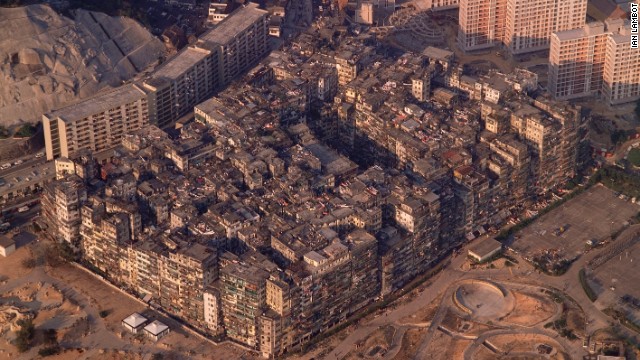
What was......the Kowloon Walled City?

99.1% of lead acid batteries are recycled back into batteries.

The Chinese yuan has become the second most-used currency in global trade finance, replacing the euro. Last year the UK and Chinese central banks signed a three-year currency swap arrangement worth 200 billion yuan which allows them to swap currencies and can be used by firms to settle trade in local currencies rather than in US dollars.

In 2012 the G-8 accounted for 50.1% of nominal global GDP. Canada was originally left out of the G6 and then Russia made it G8. Interestingly, the G8 is made up only of northern hemisphere nations, not one southern nation. China, Brazil, and India actually occupy places 2, 7 and 10 on the list of the world’s largest economies with Canada 11th and Australia 12th.

Golden Oldie:

Wagging the goat in Turkey: Turkish PM Tayyip Erdogan has blocked the access of his electorate to both Twitter and YouTube. Why? Because the social media sites leaked a recording of his government planning a false-flag war with Syria to increase support behind him. These politicians are willing to fake a war and kill people to raise their approval ratings! How do you say "Tonkin" in Turkish? Erdogan blamed the leak on "an act of terrorism." Do these tyrants all go to the same conferences and take the same courses? When will we be free of these people?

Jeremy Grantham, the co-founder of money management firm GMO, called Fed chairman Yellen "ignorant" in a recent NYT interview. He expanded his opinion in Fortune. He argues there is no evidence that low interest rates improve the economy but some evidence it improves stock prices. So will there be a discussion? Probably not.

James Van Allen discovered radiation belts held in two loose shells around the earth by its gravitation. This radiation has been captured from solar wind and other passing energy. The belts contain energetic electrons that form the outer belt and a combination of protons and electrons that form the inner belt. The belts endanger satellites, which must protect their sensitive components with adequate shielding if their orbit spends significant time in the radiation belts.


Adonis: meaning a handsome young man. Adonis was a beautiful youth whom the goddess of love, Aphrodite, eventually fell in love with. Adonis was killed by Aphrodite's other lover Ares , disguised as a boar.

Shirley Polykoff was a junior copywriter when she was given the Clairol account. The product the company was launching was Miss Clairol, the first hair-color bath that made it possible to lighten, tint, condition, and shampoo at home, in a single step When the Clairol sales team demonstrated their new product at the International Beauty Show, in the old Statler Hotel in front of thousands of beauticians jammed the hall. 'They were astonished,' recalls Bruce Gelb, who ran Clairol for years, along with his father, Lawrence, and his brother Richard. 'This was to the world of hair color what computers were to the world of adding machines.
Polykoff took her mother-in-law's dismissive comment, 'Does she or doesn't she? Only her hairdresser knows for sure' and made it their ad line.
From the fifties to the seventies, when Polykoff gave up the account, the number of American women coloring their hair rose from 7 percent to more than 40 percent.


AAAAAaaaaaaaaaannnnnnnddddddd.......a picture of Kowloon City in Hong Kong which, before it was demolished in 1994, was considered the densest settlement on earth, with 33,000 people living within the space of one city block:
Before it was demolished in 1994, Kowloon Walled City in Hong Kong was considered the densest settlement on earth, with 33,000 people living within the space of one city block.

Tuesday, April 8, 2014

Mr. Putin's World

Obama continues with his strange public approach to Russia. Putin is not a 21st Century man. Russia is a "regional power." Obama is more concerned with the apocalypse.
Here are some things about Putin's world collected from some admittedly biased Internet sites:

Less than four months after Putin took over at the KGB, opposition Duma Deputy Galina Starovoitova, the most prominent pro-democracy Kremlin critic in the nation, was murdered at her apartment building in St. Petersburg. NYT: "Initial evidence suggests that the killing was a political assassination."
Russian Attorney General, Yury Skuratov, who was investigating high-level corruption in the Kremlin, was neutralized when an illicit sex video involving Skuratov was aired on national TV.
In September 1999 an apartment building in the Pechatniki neighborhood of Moscow was blown up by a bomb. 94 were killed. Less than a week later a second bomb destroyed a building in Moscow’s Kashirskoye neighborhood. That bomb killed 118. The bombings caused the Russian Federation to launch the Second Chechen War. On October 1st, Putin declares Chechen president Aslan Maskhadov and his parliament illegitimate and Russian forces invaded. (Sound familiar?) Russia was ultimately convicted of human rights violations before the European Court for Human Rights. There have always been accusations that the apartment bombings were a "false flag" operation but there is no such evidence.
An independent public commission on the Moscow bombings was rendered ineffective because of government refusal to respond to its inquiries. The so-called “Kovalev Commission” was formed to informally investigate charges that Putin’s KGB had planted the Pechatniki and Kashirskoye apartment bombs. Sergei Yushenkov, vice-chair of the group and co-chairman of the Liberal Russia political party was gunned down at the entrance of his Moscow apartment block. Another Commission member, Yuri Shchekochikhin died of poisoning. A third was severely beaten by thugs. The Commission’s lawyer, Mikhail Trepashkin was jailed after a secret trial on espionage charges.
In 2000, reporters Igor Domnikov, Sergey Novikov, Iskandar Khatloni, Sergey Ivanov and Adam Tepsurgayev were murdered --in assassinations at home in Russia. 130 journalists have died violently since Putin came to power, not including journalists killed in Chechnya.
Yuri Shchekochikhin, a vocal opposition journalist and member of the Russian Duma and the Kovalev Commission, suddenly contracted a mysterious illness. In London a tentative diagnosis (made on smuggled biopsy tissue) was made of poisoning with thallium.
Nikolai Girenko, a prominent human rights defender, Professor of Ethnology and expert on racism and discrimination in the Russian Federation was shot dead in his home in St Petersburg.
Paul Klebnikov , the editor of the Russian edition Forbes magazine who was working on a money laundering story, was shot and killed in Moscow.
Viktor Yushchenko, anti-Russian candidate for the presidency of the Ukraine, was poisoned by Dioxin. (He survived.)
Andrei Kozlov, First Deputy Chairman of Russia’s Central Bank and another interested in money laundering, was shot and killed in Moscow.
Anna Politkovskaya, author of books and articles on Russian human rights violations in Chechnya and who attacked Putin as a dictator, was shot and killed at her home in Moscow. Washington Post columnist Anne Applebaum wrote that the only possible motive was political.
Alexander Litvinenko, a KGB defector and author of the book "Blowing up Russia," which accuses the Kremlin of masterminding the Pechatniki and Kashirskoye bombings in order to blame Chechen terrorists and justify an invasion of Chechnya, was fatally poisoned by radioactive Polonium identified as from Russian sources.
In January 19, 2009, Russian human rights attorney Stanslav Markelo was shot in the back of the head with a silenced pistol as he left a press conference at which he announced his intention to sue the Russian government for its early release of the Col. Yuri Budanov, who murdered his 18-year-old client in Chechnya five years earlier.
On July 14, 2009, leading Russian human rights journalist and activist Natalia Estemirove, viewed as the successor to Anna Politkovskaya, was abducted in front of her home in Grozny, Chechnya, taken across the border, shot and dumped in a roadside gutter.

Putin is not directly linked to any of these events but the victims were very public people and they were killed in public places or in a very public way. This kind of brutal, homicidal, intimidating culture is not typical of any century, it is typical of our brutal and violent nature unrestrained, and as such is typical of all centuries. Contrary to Mr. Obama's claims, we have not outgrown it, matured beyond it or experienced any species-changing revelation. Putin is part of what we are and must constantly guard against. And leadership is necessary to do it.

A last word from Anne Appelbaum: “As Russian (and Eastern European) history well demonstrates, it isn’t always necessary to kill millions of people to frighten all the others: A few choice assassinations, in the right time and place, usually suffice. Since the arrest of oil magnate Mikhail Khodorkovsky in 2003, no other Russian oligarchs have attempted even to sound politically independent. After the assassination of Politkovskaya on Saturday, it’s hard to imagine many Russian journalists following in her footsteps to Grozny either.”