On this day:
1644
The Qing Dynasty Manchu forces led by the Shunzhi Emperor capture Beijing during the collapse of the Ming Dynasty. The Manchus would rule China until 1912 when the Republic of China is established.
1822
Alexis St. Martin accidentally shot in the stomach, which leads to William Beaumont’s studies on digestion
1832
The June Rebellion of Paris is put down by the National Guard.
2002
Eastern Mediterranean Event. A near-Earth asteroid estimated at 10 meters in diameter explodes over the Mediterranean Sea between Greece and Libya. The resulting explosion is estimated to have a force of 26 kilotons, slightly more powerful than the Nagasaki atomic bomb.
***
“We are forced to raid the rainy-day fund, the retiree health benefits trust reserve, and to increase property taxes.” --the mayor formally known as Young Cardamom
***
Half of personal income taxes in NYC are paid by 2% of city dwellers.
***
Global AI demand will require somewhere between 4.2 and 6.6 billion cubic metres of water withdrawal annually by 2027. The lower estimate is approximately the total annual water withdrawal of four Denmarks. The higher estimate approaches half the total annual water withdrawal of the entire United Kingdom.
***
The most direct consequence of the US debt burden is one already unfolding in the federal budget every day. The government now spends more on interest payments than on Medicare, national defense, Medicaid, veterans’ benefits, food assistance, transportation, and science. Interest costs reached $476 billion in 2022 and nearly doubled by 2025, hitting $970 billion. As a share of federal revenues, interest has risen to 18.5%, eclipsing the previous record set in 1991, and will likely reach 25.8% by 2036. Nearly a third of every income tax dollar collected goes to purely servicing existing debt, leaving less room for everything else the government is supposed to do.--cartwright
***
The annual “rich list” of Britain’s wealthiest, published last week by the Sunday Times of London (owned by the same company as the Journal), found a race for the exits. One-sixth of the people on the list two years ago have dropped off, and 111 of the British citizens on the 350-name list live offshore.
***
The Nobel Prize-winning economist William Nordhaus estimated that innovators keep only a small share of the social value—roughly 2%—produced by their innovations. Under that assumption, Mr. Bezos’ $275 billion fortune implies that Amazon created about $13.8 trillion in total value for society.
***
Since 1990, the share of Europeans over 70 has increased by 78%. Aging alone explains virtually all the observed increase in heat deaths.
***
52 of California's 177 cities with at least 50,000 residents shrank every year between 2021 and 2025.
Seven of the top 10 fastest-shrinking cities are Los Angeles County suburbs. The remaining three are Bay Area suburbs (Union City, Pleasanton, San Leandro).
11 of the top 15 large U.S. cities with the steepest cumulative losses during that window were in California.
***
In 1700, there were no more than 20,000 Cherokees, mostly in the southeast
***
Data centers are now responsible for nearly half of Loudon County, VA's county tax revenue
***
The most cited global estimate puts the number of trees on Earth at about three trillion. NASA gives the Milky Way somewhere between 100 and 400 billion stars. Three trillion is more than seven times the high end of that range, so there are indeed more trees on Earth than stars in our galaxy.
***
According to PIIE, average US tariffs on Chinese goods stand at 47.5 percent and cover all imports from China, while China’s average tariffs on US goods stand at 31.9 percent. This is no longer temporary leverage. It is structural protectionism.
***
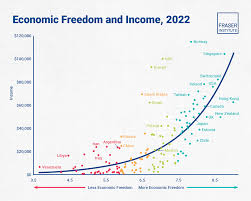 The evidence is by now overwhelming, compiled for example in works on economic history, among which my own, that liberty in equal permission has led over the past two centuries and especially over the past seventy years – speaking empirically, quantitatively, comparatively, scientifically – to equality, fairness, justice, better culture, and better ethics. Abridgments of liberty have worked the other way.
***
This is Theodore Roosevelt, Jr. arguing, in a letter written about 80 years ago, at age 57, and with unstable angina, that he should be on the first wave at Utah Beach on D-Day.
"The force and skill with which the first elements hit the beach and proceed may determine the ultimate success of the operation.... With troops engaged for the first time, the behavior pattern of all is apt to be set by those first engagements. [It is] considered that accurate information of the existing situation should be available for each succeeding element as it lands. You should have when you get to shore an overall picture in which you can place confidence. I believe I can contribute materially on all of the above by going in with the assault companies. Furthermore I personally know both officers and men of these advance units and believe that it will steady them to know that I am with them."
He died of a heart attack shortly after D-Day, and is buried at the Normandy Cemetery ( Colleville ) above Omaha Beach.
I believe Patton said that he was the bravest man he ever knew
***
D-Day
156,000 Allied soldiers landed on the beaches of Normandy by the end of the day, June 6, 1944. Despite their success, some 4,000 Allied troops were killed by German soldiers defending the beaches. At the time, the D-Day invasion was the largest naval, air, and land operation in history, and within a few days about 326,000 troops, more than 50,000 vehicles, and some 100,000 tons of equipment had landed.
A European beachhead, a new military front, a perception of vulnerability. Normandy changed the War.
Some perspective.
July 1, 1916, was the first day of the Battle of the Somme, fought on the river Somme in France, early in the First World War, from July 1 to November 18. The estimate of British deaths on the first day of the battle, THE FIRST DAY, was 60,000. Sixty thousand men.
The original Allied estimate of casualties on the Somme, made at the Chantilly Conference on 15 November 1916, was that the Germans suffered 630,000 casualties, exceeding the 485,000 suffered by the British and French. In 4 1/2 months, over 1,000,000 men threw themselves into the gears of Europe's Perpetual War Machine.
The Machine's supervisors are back in Ukraine.
British, French, and German casualties
July–November 1916
“We are forced to raid the rainy-day fund, the retiree health benefits trust reserve, and to increase property taxes.” --the mayor formally known as Young Cardamom
***
Half of personal income taxes in NYC are paid by 2% of city dwellers.
***
Global AI demand will require somewhere between 4.2 and 6.6 billion cubic metres of water withdrawal annually by 2027. The lower estimate is approximately the total annual water withdrawal of four Denmarks. The higher estimate approaches half the total annual water withdrawal of the entire United Kingdom.
***
The most direct consequence of the US debt burden is one already unfolding in the federal budget every day. The government now spends more on interest payments than on Medicare, national defense, Medicaid, veterans’ benefits, food assistance, transportation, and science. Interest costs reached $476 billion in 2022 and nearly doubled by 2025, hitting $970 billion. As a share of federal revenues, interest has risen to 18.5%, eclipsing the previous record set in 1991, and will likely reach 25.8% by 2036. Nearly a third of every income tax dollar collected goes to purely servicing existing debt, leaving less room for everything else the government is supposed to do.--cartwright
***
The annual “rich list” of Britain’s wealthiest, published last week by the Sunday Times of London (owned by the same company as the Journal), found a race for the exits. One-sixth of the people on the list two years ago have dropped off, and 111 of the British citizens on the 350-name list live offshore.
***
The Nobel Prize-winning economist William Nordhaus estimated that innovators keep only a small share of the social value—roughly 2%—produced by their innovations. Under that assumption, Mr. Bezos’ $275 billion fortune implies that Amazon created about $13.8 trillion in total value for society.
***
Since 1990, the share of Europeans over 70 has increased by 78%. Aging alone explains virtually all the observed increase in heat deaths.
***
52 of California's 177 cities with at least 50,000 residents shrank every year between 2021 and 2025.
Seven of the top 10 fastest-shrinking cities are Los Angeles County suburbs. The remaining three are Bay Area suburbs (Union City, Pleasanton, San Leandro).
11 of the top 15 large U.S. cities with the steepest cumulative losses during that window were in California.
***
In 1700, there were no more than 20,000 Cherokees, mostly in the southeast
***
Data centers are now responsible for nearly half of Loudon County, VA's county tax revenue
***
The most cited global estimate puts the number of trees on Earth at about three trillion. NASA gives the Milky Way somewhere between 100 and 400 billion stars. Three trillion is more than seven times the high end of that range, so there are indeed more trees on Earth than stars in our galaxy.
***
According to PIIE, average US tariffs on Chinese goods stand at 47.5 percent and cover all imports from China, while China’s average tariffs on US goods stand at 31.9 percent. This is no longer temporary leverage. It is structural protectionism.
***
The evidence is by now overwhelming, compiled for example in works on economic history, among which my own, that liberty in equal permission has led over the past two centuries and especially over the past seventy years – speaking empirically, quantitatively, comparatively, scientifically – to equality, fairness, justice, better culture, and better ethics. Abridgments of liberty have worked the other way.***
This is Theodore Roosevelt, Jr. arguing, in a letter written about 80 years ago, at age 57, and with unstable angina, that he should be on the first wave at Utah Beach on D-Day.
"The force and skill with which the first elements hit the beach and proceed may determine the ultimate success of the operation.... With troops engaged for the first time, the behavior pattern of all is apt to be set by those first engagements. [It is] considered that accurate information of the existing situation should be available for each succeeding element as it lands. You should have when you get to shore an overall picture in which you can place confidence. I believe I can contribute materially on all of the above by going in with the assault companies. Furthermore I personally know both officers and men of these advance units and believe that it will steady them to know that I am with them."
He died of a heart attack shortly after D-Day, and is buried at the Normandy Cemetery ( Colleville ) above Omaha Beach.
I believe Patton said that he was the bravest man he ever knew
***
D-Day
156,000 Allied soldiers landed on the beaches of Normandy by the end of the day, June 6, 1944. Despite their success, some 4,000 Allied troops were killed by German soldiers defending the beaches. At the time, the D-Day invasion was the largest naval, air, and land operation in history, and within a few days about 326,000 troops, more than 50,000 vehicles, and some 100,000 tons of equipment had landed.
A European beachhead, a new military front, a perception of vulnerability. Normandy changed the War.
Some perspective.
July 1, 1916, was the first day of the Battle of the Somme, fought on the river Somme in France, early in the First World War, from July 1 to November 18. The estimate of British deaths on the first day of the battle, THE FIRST DAY, was 60,000. Sixty thousand men.
The original Allied estimate of casualties on the Somme, made at the Chantilly Conference on 15 November 1916, was that the Germans suffered 630,000 casualties, exceeding the 485,000 suffered by the British and French. In 4 1/2 months, over 1,000,000 men threw themselves into the gears of Europe's Perpetual War Machine.
The Machine's supervisors are back in Ukraine.
British, French, and German casualties
July–November 1916
| Month | British | French | Sub- total | German | (% of Allied total) |
|---|---|---|---|---|---|
| July | 158,786 | 49,859 | 208,645 | 103,000 | 49.4 |
| August | 58,085 | 18,806 | 76,891 | 68,000 | 88.4 |
| September | 101,313 | 76,147 | 177,460 | 140,000 | 78.9 |
| October | 57,722 | 37,626 | 95,348 | 78,500 | 82.3 |
| November | 39,784 | 20,129 | 59,913 | 45,000 | 75.0 |
| Total | 415,690 | 202,567 | 618,257 | 434,500 | 70.3 |


No comments:
Post a Comment