Monday, August 22, 2016

The Investigative Press

I do not know much about Eric Zuesse but I admit to suspicion of a guy called an "investigative historian" who writes a lot for The HuffPo. But he has written a fierce article about the UK and US in the Middle East. Some is just quoting reasonable people, though. Some excerpts, fwiw:

Peter Ford, who was the UK’s Ambassador in Syria during 2003-2006, was asked by the BBC in the "The Big Question" interview on Feb.14th, whether the current Syrian President Bashar al-Assad would have to be a part of the solution in that country after the war is over, and Ambassador Ford said:

“I think sadly, but inevitably, he is. Realistically, Assad is not going to be overthrown. This becomes more clear with every day that passes. Western analysts have been indulging in wishful thinking for 5 years; it’s time to get real, we owe it to the Syrian people to be much more realistic and hard headed about this. The West has to stop propping up the so-called ‘moderate opposition’, which is not moderate at all.”
This was quoted by Almasdar News on Feb. 18th, which went on to note that,
"The frustrated interviewer asked Mr. Ford about 'what we should have done,' and he responded that 'we should have backed off, we should have not tried to overthrow the regime.' Mr. Ford eloquently added that this policy has been 'like a dog returning to vomit.’”
"...we never saw a secular Arab regime that we didn’t want to overthrow.”
He was saying there that we support only non-secular regimes, sectarian regimes, in Arabia, this meaning fundamentalist Sunni governments — especially Saudi Arabia, Qatar, Kuwait, UAE, the very same regimes that even the U.S. Secretary of State acknowledged in a 2009 cable that was wikileaked are the chief regimes that are funding jihadist groups.
Ford was noting that the United States and UK strive to keep in power those governments, the ones that are led by royal families that supply the bulk of funding for jihadist groups — jihadists who perpetrate terrorism in the United States and Europe.
“We never saw a secular Arab regime that we didn’t want to overthrow”: Ambassdor Ford was so bold as to imply that our governments are supporting, under the table, the very same ruling families that they know to be funding (as that cable only vaguely referred to them) “Sunni terrorist groups worldwide” (which includes in Western countries, too).
The BBC’s interviewer ignored that statement; he wasn’t struck by it, such as to ask: “Why are we supporting the chief funders of Islamic jihad? Why are we overthrowing (or in Syria are trying to overthrow) a secular regime, against which we join foreign jihadist groups in order to overthrow that non-sectarian regime; why are these dogs, as you call the U.S. and UK, returning time and again to that vomit?”

This was a live interview program, and so the BBC censors weren’t able to eliminate Ambassador Ford’s responses from the interview; but, instead, the interviewer did his best to interrupt and to talk over Ford’s shocking — and shockingly truthful — assertions about the government (ours) that supposedly represent our  interests (and not the interests of Western oil companies etc.). Ford will probably not be invited again to be on live television in the West to air his views about Syria.

Now, on Clinton:

Here she was, expressing her current view regarding Syria, in a recent debate against her Democrstic Pasrt opponent Bernie Sanders:
QUESTIONER: In respect to when you take out Syrian President Bashar al-Assad. Right now or do you wait? Do you tackle ISIS first? You have said, Secretary Clinton, that you come to the conclusion that we have to proceed on both fronts at once. We heard from the senator just this week that we must put aside the issue of how quickly we get rid of Assad and come together with countries, including Russia and Iran, to destroy ISIS first. Is he wrong?

CLINTON: I think we're missing the point here. We are doing both at the same time.

QUESTIONER: But that's what he's saying, we should put that aside for now and go after ISIS.

CLINTON: Well, I don't agree with that.
She's still (now after five years, and even though she knows that we’re supporting jihadist-backing Arabic royal families and their Shariah-law regimes) comes back to that “vomit”: that "we never saw a secular Arab regime that we didn’t want to overthrow.She does this even though, in October 2014, the man who had collected the mega-donations to Al Qaeda (all of which had been in cash) had detailed, under oath, in a U.S. court proceeding, that the Saud family were the main people who paid the "salaries" of the 9/11 terrorists. The Saud family are now the chief backers of the overthrow-Assad campaign. Do politicians such as Clinton actually represent the Sauds? It’s not only the Bush family who do. What’s exhibited here is a double-scandal: first, that a person such as that would even be a Democratic Party candidate for the U.S. Presidency (and Jeb Bush shares Hillary Clinton’s foreign policy prescriptions, though he’s virtually certain not  to win the Republican Presidential nomination); and, second, that the Western press try to avoid, as much as possible, to expose the fact that this is, indeed, “vomit,” and avoid to explain to their audience the very corrupt governmental and news-media system that enables people such as Ms. Clinton to become and remain a leading Presidential candidate in the United States. Clearly, a person like that isn’t qualified to be in government at all; she’s corrupt, or else incredibly stupid. And no one thinks she’s that stupid. But lots of people accuse her of being corrupt.

Sunday, August 21, 2016

Sunday 8/21/16


The Gospel today is on the "narrow gate" through which salvation is reached. It is the idea behind the "straight and narrow," where "straight" is from "strait," or "confine" (as in "straitjacket" or "the Straits of Magellan.") The spiritual life is a limiting, refined life; it is humanity pared down. Our spiritual nature is our essence and the material has been accumulated, to be thrown off.

One of the sorrows of the times is our disinterest--if not active disdain--for the thoughts and writings of great men of the past. We act as if the observations and concerns of those passed are beneath us now, as if something has been solved.

This is John Donne's Holy Sonnet 7:

At the round earth’s imagined corners, blow
Your trumpets, angels, and arise, arise
From death, you numberless infinities
Of souls, and to your scattered bodies go,
All whom the flood did, and fire shall, o’erthrow,
All whom war, dearth, age, agues, tyrannies,
Despair, law, chance, hath slain, and you whose eyes,
Shall behold God, and never taste death’s woe.
But let them sleep, Lord, and me mourn a space;
For, if above all these, my sins abound,
‘Tis late to ask abundance of thy grace,
When we are there. Here on this lowly ground,
Teach me how to repent; for that’s as good
As if thou’ hadst seal’d my pardon with thy blood.

Saturday, August 20, 2016

Cab Thoughts 8/20/16

"We are the friends of liberty everywhere but custodians only of our own."--John Adams

For progressives, a legal minimum wage had the useful property of sorting the unfit, who would lose their jobs, from the deserving workers, who would retain their jobs.  Royal Meeker, a Princeton economist who served as Woodrow Wilson’s U.S. Commissioner of Labor, opposed a proposal to subsidize the wages of poor workers for this reason.  Meeker preferred a wage floor because it would dis-employ unfit workers and thereby enable their culling from the work force.--Thomas Leonard, on the early history of the minimum wage

A recent study shows students from for-profit schools on average were worse off after attending for-profit schools. Undergraduates were less likely to be employed, and earned smaller paychecks–about $600 to $700 per year less–after leaving school compared to their lives before. Those who enrolled in certificate programs made roughly $920 less per year in the six years after school compared to before they enrolled. The key factor is that most of these students never earned a degree–they dropped out early. Excluding them, the minority of students who earned degrees saw an earnings bump after graduating. This does not include debt which 90% of students take on. The analysis includes one big caveat: The group of students they studied left school either just before or during the 2007-2009 recession. Unemployment was skyrocketing, and incomes were falling broadly. “Therefore, our findings are likely to be partially explained by overall weakness in the labor market,” they say.
Think Trump University.

What is....the Great Attractor?

Sowell has an article on the problems of socialism and includes this observation on the effects of the minimum wage as he complains about the fact that no one ever looks at cause and effect in socialism: In 1948, when inflation had rendered meaningless the minimum wage established a decade earlier, the unemployment rate among 16- to 17-year-old black males was under 10%. But after the minimum wage was raised repeatedly to keep up with inflation, the unemployment rate for black males that age was never under 30% for more than 20 consecutive years, from 1971 through 1994. In many of those years, the unemployment rate for black youngsters that age exceeded 40% and, for a couple of years, it exceeded 50%.

Heuristic: adj: 1. encouraging a person to learn, discover, understand, or solve problems on his or her own, as by experimenting, evaluating possible answers or solutions, or by trial and error: a heuristic teaching method. 2. serving to indicate or point out; stimulating interest as a means of furthering investigation. usage: Not least, the rigidity of the dictation has also been the subject of long arguments over its heuristic value as a learning method.-- Lilia Blaise, "In Paris Suburbs, Adopting a Dreaded School Test as a Tool of Integration," New York Times, May 11, 2016 Heuristic is a New Latin construction, equivalent to the Greek heurískein, "to find out, discover." It entered English in the early 1800s.

From a paper from Princeton on the GDP growth in Democrat vs. Rube-publican Presidencies. One writer was Blinder: "During the 64 years that make up the core 16 terms, real GDP growth averaged 3.33% at an annual rate. But the average growth rates under Democratic and Republican presidents were starkly different: 4.33% and 2.54% respectively. This 1.79 percentage point gap (henceforth, the “D-R gap”) is astoundingly large relative to the sample mean. It implies that over a typical four year presidency the U.S. economy grew by 18.5% when the president was a Democrat, but only by 10.6% when he was a Republican. And since the standard deviations of quarterly growth rates are roughly equal (3.8% for Democrats, 3.9% for Republicans, annualized), Democratic presidents have presided over growth that was faster but not more volatile." (“it appears that the Democratic edge stems mainly from more benign oil shocks, superior [productivity], and perhaps greater defense spending and faster growth abroad.”)

There will be a lot of talk this campaign about free trade. It is not complex: It is unregulated exchange. People make decisions as to what they will give up for what they will gain. As an aside, the losses to certain segments of America, while large in an absolute sense, are utterly trivial compared to the gains in living standards seen in places like Asia.

Judge Andrew S. Hanen of Federal District Court in Brownsville accused the Justice Department lawyers of lying to him during arguments in the immigration case, and he barred them from appearing in his courtroom. (From an article in the NYT on May, 16, 2016 titled "Federal Judges in Texas Demands Justice Dept. Lawyers Take Ethics Class.") Now, isn't that a big deal and has anybody heard much about this?

What about this: From the Washington Examiner: “The CIA's inspector general is claiming it inadvertently destroyed its only copy of a classified, three-volume Senate report on torture, prompting a leading senator to ask for reassurance that it was in fact ‘an accident.’” The IRS seems to have destroyed hard drives containing potentially incriminating evidence regarding the IRS Tea Party targeting case. Clinton's emails kept on a private unsecured server — presumably to avoid Freedom of Information Act disclosures — were deleted. Now emails from Hillary’s IT guy, who is believed to have set up the server, have disappeared. Gonzalo Lira wrote: “A terrible sentence, when a law-abiding citizen speaks it: Everybody else is doing it — so why don’t we? ... What’s really important is that law-abiding middle-class citizens are deciding that playing by the rules is nothing but a sucker’s game.” (from Reynolds in USA Today)

Golden oldie:
http://steeleydock.blogspot.com/2013/07/reward-limits.html

Our galaxy and other nearby galaxies are being pulled toward a specific region of space. It’s about 150 million light years away and no one is sure what it is. But it is named. It is called the Great Attractor. Part of the reason the Great Attractor is so mysterious is that it happens to lie in a direction of the sky known as the “Zone of Avoidance”. This is in the general direction of the center of our galaxy, where there is so much gas and dust that we can’t see very far in the visible spectrum. We can see how our galaxy and other nearby galaxies are moving toward the great attractor, so something must be causing things to go in that direction. That means either there must be something massive over there, or it’s due to something even more strange and fantastic.
When evidence of the Great Attractor was first discovered in the 1970s, we had no way to see through the Zone of Avoidance. But while that region blocks much of the visible light from beyond, the gas and dust doesn’t block as much infrared and x-ray light. As x-ray astronomy became more powerful, we could start to see objects within that region. What we found was a large supercluster of galaxies in the area of the Great Attractor, known as the Norma Cluster. It has a mass of about 1,000 trillion Suns. That’s thousands of galaxies. 1,000 TRILLION SUNS! THOUSANDS OF GALAXIES!

Often one will see the argument that both minimum wage and restricted trade help some and hurt others. Sort of a wash. But there is a big difference. Minimum-wage legislation is a restriction on people’s freedom to find mutually agreeable terms of exchange while free trade is a policy of refusing to so restrict people’s freedom. This freedom thing is really very difficult for some people.
If there is any place in the Guinness Book of World Records for words repeated the most often and revered, over the most years, without one speck of evidence, “diversity” should be a prime candidate.
Is diversity our strength? Or anybody’s strength, anywhere in the world? Does Japan’s homogeneous population cause the Japanese to suffer? Have the Balkans been blessed by their heterogeneity — or does the very word “Balkanization” remind us of centuries of strife, bloodshed and unspeakable atrocities, extending into our own times?

Birdbrain. There is a paper out on bird neuronal density. Here is a summary of its significance and an abstract:
Significance
Birds are remarkably intelligent, although their brains are small. Corvids and some parrots are capable of cognitive feats comparable to those of great apes. How do birds achieve impressive cognitive prowess with walnut-sized brains? We investigated the cellular composition of the brains of 28 avian species, uncovering a straightforward solution to the puzzle: brains of songbirds and parrots contain very large numbers of neurons, at neuronal densities considerably exceeding those found in mammals. Because these “extra” neurons are predominantly located in the forebrain, large parrots and corvids have the same or greater forebrain neuron counts as monkeys with much larger brains. Avian brains thus have the potential to provide much higher “cognitive power” per unit mass than do mammalian brains.
Abstract
Some birds achieve primate-like levels of cognition, even though their brains tend to be much smaller in absolute size. This poses a fundamental problem in comparative and computational neuroscience, because small brains are expected to have a lower information-processing capacity. Using the isotropic fractionator to determine numbers of neurons in specific brain regions, here we show that the brains of parrots and songbirds contain on average twice as many neurons as primate brains of the same mass, indicating that avian brains have higher neuron packing densities than mammalian brains. Additionally, corvids and parrots have much higher proportions of brain neurons located in the pallial telencephalon compared with primates or other mammals and birds. Thus, large-brained parrots and corvids have forebrain neuron counts equal to or greater than primates with much larger brains. We suggest that the large numbers of neurons concentrated in high densities in the telencephalon substantially contribute to the neural basis of avian intelligence.

Americans added $71 billion in credit card debt in 2015 and repaid just $26.8 billion during the first quarter of 2016—the smallest first-quarter paydown since 2008. Surprisingly, the group with the highest credit card debt are middle-aged Americans. The average 45- to 54-year-old American owes $9,000 on credit cards, 50% more than the average Millennial. But credit cards are just one part of the American debt binge. Total outstanding consumer credit, a measure of non-mortgage debt, increased by $13.4 billion to $3.6 trillion in April. The biggest chunk is student loans, which make up 37% of outstanding consumer credit. Student-loan lending by the government climbed to $989.6 billion in April and now stands at $1.26 trillion.
The average interest rate on credit cards today is a whopping 15.19%.

Jeremy Bentham regarded natural rights as intellectually incoherent. 
Natural-rights theory was the revolutionary doctrine of the seventeenth and eighteenth centuries, being used to justify resistance to unjust laws and revolution against tyrannical governments. This was the main reason why Edmund Burke attacked natural rights—or “abstract rights,” as he called them—so vehemently in his famous polemic against the French Revolution.
Natural rights, according to Bentham, are “simple nonsense: natural and imprescriptible rights, rhetorical nonsense, — nonsense upon stilts” So-called moral and natural rights are mischievous fictions and anarchical fallacies that encourage civil unrest, disobedience and resistance to laws, and revolution against established governments. Only political rights, those positive rights established and enforced by government, have “any determinate and intelligible meaning.” Rights are “the fruits of the law, and of the law alone. There are no rights without law—no rights contrary to the law—no rights anterior to the law.”
So no rights precede law; law creates rights. This in opposition to the American Revolution--inspired by Locke and others--that declared certain qualities in human life basic and inalienable where the job of government was to protect them.

The Magna Carta was agreed upon by King John after a rebellion of his barons. It established a legal relationship between the King and his subjects with actual limits. Of greatest interest to later generations was clause 39, which stated that “no free man shall be arrested or imprisoned or disseised [dispossessed] or outlawed or exiled or in any way victimised…except by the lawful judgment of his peers or by the law of the land.” This clause has been celebrated as an early guarantee of trial by jury and of habeas corpus and inspired England’s Petition of Right (1628) and the Habeas Corpus Act (1679).

According to a New York Post article (May 22, 2016), in just two years, Hillary Clinton — former first lady, senator from New York and secretary of state — collected over $21 million in speaking fees. These fees were paid by Goldman Sachs, Morgan Stanley, Deutsche Bank, Fidelity Investments, UBS, Bank of America and several hedge fund companies.In 2015, lobbyists spent $3.22 billion lobbying Congress. In 2013 and 2014, just 10 chemical companies and allied organizations spent more than $154 million lobbying the federal government. The Center for Responsive Politics in 2013 reported that the Dow Chemical Co. “posted record lobbying expenditures” in 2012, “spending nearly $12 million,” and was “on pace to eclipse” that amount. Fourteen labor unions were among the top 25 political campaign contributors between 1989 and 2014.
Why do you suppose people give good money away to politicians?

Shady internet lenders in China are reportedly coercing female college students to provide nude pictures of themselves as collateral – a loan-for-porn scheme that has prompted anger on the country’s internet.Under the arrangement reported by state media this week, some college students have agreed to send photos of themselves naked, holding their identification cards, to potential lenders. In exchange, they became eligible for higher loan amounts – two to five times the normal sum, the state-run Beijing Youth Daily reported.
Lenders tell the students they will publish the photos online if the loans are not repaid on time, often at usurious interest rates.

AAAAAAaaaannnnnndddddddd.......a graph using old and probably outdated and overly optimistic data on the effect of early saving:

Friday, August 19, 2016

Happy Vasili Arkhipov‏ Day

Today is the anniversary of the death of Vasili Arkhipov, a beacon of integrity and intelligence in the fog of nationalism and bravado. His death is important because it was caused by technical overreach instigated by that nationalism and bravado and we should be reminded of that. But his life, particularly his human heroism during the blundering Cuban Missile Crisis, is a tribute to the better elements of mankind.

At the height of the Cold War with America, the Russians began to fear the gap developing between the two powers' submarine fleets. The Russians eventually rushed the development and construction of the K-19, the first of two new Hotel-class ballistic missile submarines. As with much of the Russian development and manufacturing, there was a lot wrong with the K-19. In the movie, "K-19," Harrison Ford played the part of a real Russian sub commander in 1961 who managed a real on-board accident in a K-19 cooling system that threatened a meltdown. As in Chernobyl, individuals accepted their radiation deaths as they went into the reactor on the K-19 and Jerry-rigged an alternative cooling system. Many died, the commander played by Ford years later died of complication of radiation exposure.

His name was Vasili Arkhipov. There should be a world holiday for him.

The following year, in July of 1962, Soviet leader Nikita Khrushchev agreed to Cuba’s request to place nuclear missiles in Cuba as a deterrent to future US interference after the Bay of Pigs invasion debacle a few years earlier. In mid-October, a U.S. reconnaissance airplane produced evidence of medium and long range Soviet ballistic missiles in Cuba. President John F. Kennedy promptly established a military blockade to prevent further missiles from entering Cuba and demanded that the missiles be dismantled and returned to the Soviet Union.

The two great powers faced off. It is important to know that Kennedy was being advised to launch a first strike against the Russians with the logic that the Russian retaliatory ability was limited and would cause 30 million civilian deaths at the most. The military thought that a bargain. At the same time Castro was campaigning Khrushchev for a first strike against the U.S., knowing full well Cuba as an entity would not exist afterwards. (See The Armageddon Letter.) These people were the world leaders whose decisions were going to determine the future of the world. And those who were democratically elected did not seem to be getting any less crazy advice.

The K-19 hero Vasili Arkhipov was second-in-command in the nuclear-armed Foxtrot-class submarine B-59, part of a flotilla of four submarines protecting Soviet ships on their way to Cuba. On October 27, as they approached the US imposed quarantine line, US Navy ships in pursuit started dropping depth charges to force the B-59 to surface for identification – completely unaware that it was carrying nuclear weapons.
The explosions rocked the submarine which went dark except for emergency lights. With the air-conditioning down, temperature and carbon dioxide levels rose sharply. The crew was hardly able to breathe.
Unable to contact Moscow and under pressure from the Americans for several hours, Captain Valentin Savitsky finally began to crack. He assumed that war had broken out between the two countries and decided to launch a nuclear torpedo. He would not go down without a fight.
However, unlike the other submarines in the flotilla, the three officers on-board the B-59 had to agree unanimously to launch the nuclear torpedo. As the other officer sided with Savitsky, only Arkhipov stood in the way of launching World War III.
An argument broke out among the three, but Arkhipov was able to convince the Captain not to launch the torpedo. How was he able to prevail under such stressful conditions? He was actually in charge of the entire flotilla and as such was equal in rank to Savitsky. But the reputation he had gained during the K-19 incident may have been the decisive factor in convincing the other officers to abort the launch. That detail may have made all the difference.

The submarine eventually surfaced and awaited orders from Moscow, averting what would have been a nuclear holocaust. The Cuban Missile Crisis ended a few days later.
This crucial episode of the Cold War only became known to the West after the collapse of the Soviet Union many years later.

Thursday, August 18, 2016

More PSA

There are some fascinating aspects to the PSA discussion. Many believe that testing for PSA finds disease that has no implication to health. That is, the small is not indicative of the large. A biopsy of the prostate showing cancer does not mean that the individual with that biopsy is at risk from cancer--but not always.
The graph below from the New England Journal of Medicine shows that the time after the introduction of PSA testing resulted in dramatic drop in prostate cancer deaths. (The other side of the argument is that many were treated who did not need it.)
Another thing from the graph: Look at the virtual non-impact of breast cancer survival with the introduction of mammography.

Wednesday, August 17, 2016

Cab Thoughts 8/17/16

“Human rights can only be assured among a virtuous people. The general government can never be in danger of degenerating into a monarchy, an oligarchy, an aristocracy, or any despotic or oppressive form so long as there is any virtue in the body of the people.” --George Washington


Harvard Professor John Y. Campbell’s article in the May 2016 issue of the American Economic Review titled “Restoring Rational Choice: The Challenge of Rational Consumer Regulation.”  His conclusion? “...household financial mistakes create a new rationale for government intervention in the economy.” So we're dumb and can't have the keys to the car. I wonder when they'll think we're too dumb to vote for the guys that will drive.

Sales of safe deposit boxes in Europe are soaring. And the German insurance company Munich Re is experimenting with the physical storage of banknotes. To start, it will store €10 million in notes.

Richard Fisher was president of the Federal Reserve Bank of Dallas and voting member of the Federal Open Market Committee (FOMC) from 2005 to 2015. He is wired into the Fed and the state of the economy. He spoke at a conference recently. He is worried about the US government debt, which now totals $19 trillion (up $11 trillion since 2008), because the Fed has fired all its monetary bullets and has no room for further expansion on the balance sheet.
But Fisher’s most telling comment came during the Q&A session when he was asked how his personal portfolio was positioned. Fisher’s response: “In the fetal position.”
Moreover, he also said, “All my very rich friends are holding a lot of cash.” 

What is...Aleutian Islands?

[R]eins of power come at a price.  Anyone acquiring the reins will be a person to whom such power is worth the price.  Moreover, the more power there is to acquire, the more it will be worth, the more people must invest to acquire it, and thus the more that such power gets concentrated in the hands of people intent on using it for all that it is worth.  So, the process by which people gain political appointment will systematically tend, and increasingly tend, to select the wrong person for the job.-- Arizona philosopher David Schmidtz

How the country is being managed is always a subjective assessment. The national debt was 8 trillion(!) in 2008. It is now 19 trillion. In Obama's two terms it has leapt 11 trillion dollars. Is that really "managing" the problems?

Legalized marijuana, for medical if not recreational use, is still illegal. The June 6, 2005 Supreme Court ruling in Gonzales v. Raich, upholding a federal ban on medical use regardless of state-passed decriminalization. The Supreme Court case arose from California’s Proposition 215, which in 1996 authorized doctor-prescribed use of cannabis within the state; twenty years on, two dozen other states have followed California’s example, as have many countries worldwide. While federal authorities in the U.S. have mostly turned a blind eye to statewide decriminalization. The economic implications of legal drug commerce, though, is beginning to slide into financial articles.
 
Specious: adj: Superficially true, but actually wrong. ety: Originally, the word meant beautiful or pleasing to the sight. Over the centuries the meaning shifted to describe something that is deceptively appealing. The word is from Latin speciosus (fair, beautiful), from specere (to look). Ultimately from the Indo-European root spek- (to observe). usage: “As always, exchange officials will make the final judgment and, we assume, reject specious claims.” Health Care Caricature; The New York Times; Mar 22, 2014.

Bordeaux offering a Bastiat slant on terrorism and protectionism: If we would – as we should – condemn and punish terrorists who create jobs and higher incomes by poisoning municipal water supplies, why do we not do the same to politicians who terrorize us with tariffs and other import restrictions?  And why do we not scorn and ridicule – or at least ignore for the ignoramuses the they are – the pundits, preachers, and professors who encourage the economic terrorism that is protectionism?

A nice summary of McCloskey's trilogy by Higgs: Deirdre McCloskey has attracted much attention to her trilogy The Bourgeois Era, in which she advances (again) the notion that the process of modern economic growth—as she calls it, the Great Enrichment—has sprung mainly and fundamentally from a change in reigning ideas, in particular, from cultural changes that began in Holland and Great Britain in the seventeenth and eighteen centuries and accorded for the first time great respect to innovators and capitalists who carried out the technological and economic changes whereby the rate of overall economic productivity growth was raised to a much higher level and average incomes increased eventually by a factor of 30-100. McCloskey, with tremendous erudition, argues against all the previously advanced theories—material capital accumulation, human capital accumulation, slavery, improved institutions (in particular, better-established private property rights), the presence of certain raw materials such as iron or coal, and all the others—and offers instead her own explanation rooted in the cultural and ideological changes that have often been lumped under the rubric of “liberalization” in the old, classical liberal sense of this term.

Golden oldie:
http://steeleydock.blogspot.com/2013/04/the-church-of-materialism.html

Re: California's drought. Justin Sheffield concluded in a 2012 Nature paper that “there has been little change in drought over the past 60 years,” the period that includes half the warming of the last 100 years. Moreover, if global warming were an important cause of drought, the world should have had more droughts. It hasn’t. Was California’s drought part of a long-term decline in precipitation? No. According to the National Oceanic and Atmospheric Administration (NOAA),“The current drought is not part of a long-term change in California precipitation, which exhibits no appreciable trend since 1895. ” The higher temperatures of the twentieth century, another Nature study explains, did not translate into increased extremes between wet and dry weather. Further, looking back in history, drought was most severe in the twelfth and fifteenth centuries. Inconveniently, the twelfth century was warm and the fifteenth century was cold..
 
Philosophy is the study of metaphysics (existence), epistemology (knowledge), ethics (action), politics (force) and esthetics (art and beauty).

A new trove of State Department emails reveal how a major Clinton Foundation donor - and high frequency stock trader - was placed on a sensitive government intelligence advisory board even though he had no experience in the field. The emails further reveal how, after inquiries from ABC News, the Clinton staff sought to “protect the name” of the Secretary, “stall” the ABC News reporter and ultimately accept the resignation of the donor just two days later.
 
After Byron's death, three of his closest friends (his publisher, John Murray; his fellow celebrity poet, Thomas Moore; and his companion since his Cambridge days, John Cam Hobhouse), together with lawyers representing Byron’s half-sister and his widow, decided that his written memoirs were so scandalous, so unsuitable for public consumption, that it would ruin Byron’s reputation forever. Gathered in Murray’s drawing room in Albemarle Street, they ripped up the pages and tossed them into the fire. The incident is often described as the greatest crime in literary ­history.
 
GE is leaving Connecticut for Boston. Hedge funds are moving to Miami. Capital goes to where it is treated best.
 
The Aleutian Islands are a chain of 14 large volcanic islands and 55 smaller ones extending about 1,200 mi. westward from the Alaska Peninsula toward the Kamchatka Peninsula in Russia, and mark a dividing line between the Bering Sea to the north and the Pacific Ocean to the south.  While nearly all the archipelago is part of Alaska and is usually considered as being in the "Alaskan Bush", at the extreme western end, the small, geologically related Commander Islands belong to Russia.
In the early morning of 6 June 1942, 500 Japanese soldiers landed on Kiska, one of the Aleutian Islands of Alaska. They took the only inhabitants of the island, a ten man (and six dog) US Navy Weather Detachment by complete surprise and quickly took control of American soil. This was part of a grand vision of Pacific control that really centered upon Midway. Yamamoto intended to "invade and occupy strategic points in the Western Aleutians" as well as Midway Island on the western tip of the Hawaiian chain. He envisioned these two sites as anchors for a defensive perimeter in the north and central Pacific.
His plan also included the final destruction of the U.S. Pacific Fleet. By using the Aleutians and then Midway as bait, he intended to lure the already weakened American fleet from Pearl Harbor and annihilate it before new construction could replace the losses it had sustained on December 7th. An attack on the Aleutians in early June 1942, Yamamoto believed, would draw the U.S. fleet north to challenge his forces. With the departure of the U.S. warships from Pearl Harbor, he would then move his main fleet to seize Midway. Because of Midway's importance-the island was within bomber range of Pearl Harbor-he concluded that Nimitz would redirect his fleet from the Aleutians to Midway to prevent the loss of the island. Waiting off Midway to intercept that force would be the largest concentration of naval power ever assembled by Japan. After overwhelming the American fleet, Yamamoto would have undisputed control of the central and western Pacific.
But the Americans had the Japanese code and the battle of Midway stopped all that.
 
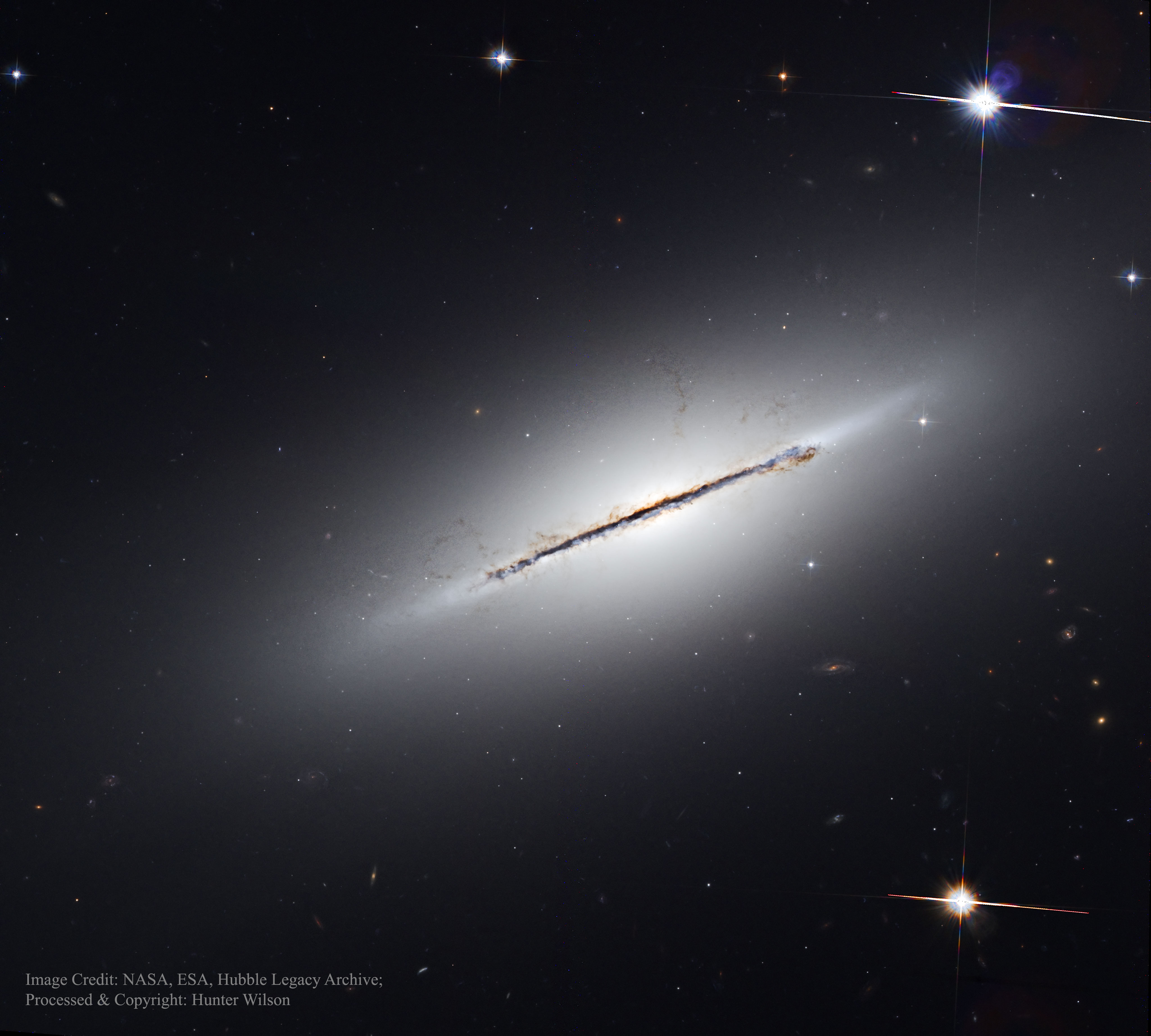
AAAAaaaaaaannnnnnndddddddd ...........a picture of a spiral galaxy, edge-on:

See Explanation.  Clicking on the picture will download  the highest resolution version available. 
Edge-On Galaxy NGC 5866 

Tuesday, August 16, 2016

Patty Hearst

Patty Hearst has haunted me ever since day one. Her story started in February, 1974 when she was kidnapped by a group that called themselves The Symbionese Liberation Army, a group of wackos, crackpots, overt madmen and one possible genius. It is hard to pick what part of the story is the most distressing. And now, years later, the story is back, spearheaded by a publicity blitz for a new book, American Heiress: The Wild Saga of the Kidnapping, Crimes and Trial of Patty Hearst, by Jeremy Toobin.
 
Patty Hearst was 19-years-old, the granddaughter of the wealthy newspaper publisher William Randolph Hearst, when she was kidnapped by the Symbionese Liberation Army. They were a small group with no coherent goals and several were clearly mad. Toobin's explanation for them is the best I have ever heard: They were the activist endpoint of the demonstration, the Guerilla Theater. They were not a movement, they were an armed display. A revolutionary spectacle.

There are two inexplicable elements to the story. (Toobin asks a third question: How did she get off?)
First, crazy people do not join groups and they certainly do not join other madmen. Isolation, preoccupied self-absorption, is the very nature of psychosis. Charming as the notion might be, there are no revolutions in an asylum. An individual might threaten Nurse Ratchet but he will have no help. So how did these lunatics organize? Modern problems make this question all the more important.
Second, what happened to Hearst? She was a rather simple girl from a very rich family thrown into this loony bin who emerged a gun-toting, stranger bombing, bank robber. How did this happen? What was going on in her mind? There was some serious problems at the time. During the early and mid '70s, there were 1,000 — 1,000!— bombings a year in the United States, many the result of the murderous Bill Ayres, his murderous wife and his SDS. But Patty Hearst, bank robber? Again, with the maniacs drifting to more modern death cults, it is a reasonable question.

The Smart girl failed to take some opportunities to escape but she was a frightened child. Hearst may not have been a PhD candidate but the life she was trapped in certainly looked worth escaping. Why didn't she? Here is Toobin on one of Hearst's escape opportunities: "Patty and two of the SLA members decide to go shopping. They need stuff and they go to a sporting goods store. Bill and Emily Harris go inside the sporting goods store, leaving Patty in a van across the street, with the key in the ignition. She's free to leave — she can drive away, she can walk away — but instead she waits. Bill and Emily Harris stupidly decide to shoplift. They leave the store and the clerk tackles them on the sidewalk. Across the street Patty Hearst is looking at her two comrades tackled by the clerk. So what does she do alone in the van? Does she drive away? Does she walk away? No, she picks up a machine gun and fires wildly across the street to try to free Bill and Emily Harris. It doesn't work at first, so she picks up another gun and fires another fusillade of bullets across the street, miraculously not hitting anybody, but, in fact, successfully freeing Bill and Emily Harris, who get back into the van and drive off."
She also ended up in the E.R. with poison oak. Nothing. She was in difficulty on a hike and was helped by a forest ranger. Not a word. Instead she maintained her anonymity and went on robbing banks, shooting up streets and placing bombs.

After her small group of inept desperadoes were all killed, Hearst was eventually captured by the FBI, convicted of bank robbery and sentenced to 7 years in federal prison. She served 22 months before President Jimmy Carter commuted her sentence. Later, President Bill Clinton pardoned her.

Toobin calls the presidential actions on Hearst's behalf an example of "wealth and privilege in action. ... The fact that she got these two presidential gestures of forgiveness is the purest example of privilege on display that frankly I have ever seen in the criminal justice system," Toobin says. Although, for some reason, many of the insane radicals of the time were never seriously judged. (See Ayres, his murderous wife and their SDS death cult.)

           
"This iconic photograph became one of the most famous images of the 1970s," Jeffrey Toobin says. It shows Patty Hearst standing in front of a Symbionese Liberation Army flag several months after she was kidnapped.
Hearst's iconic photograph in front of a Symbionese Liberation Army flag several months after she was kidnapped.