Saturday, February 29, 2020

Economic Stats


                                Economic Stats


This may have changed this week:

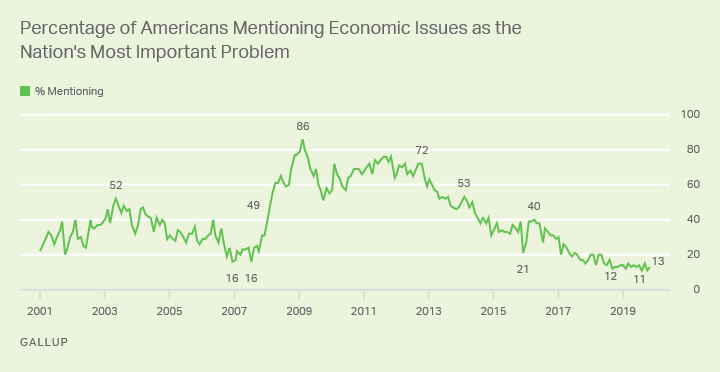
Line graph. 2001-2019 trend, percentage of Americans mentioning economic issues as the nation's most important problem.

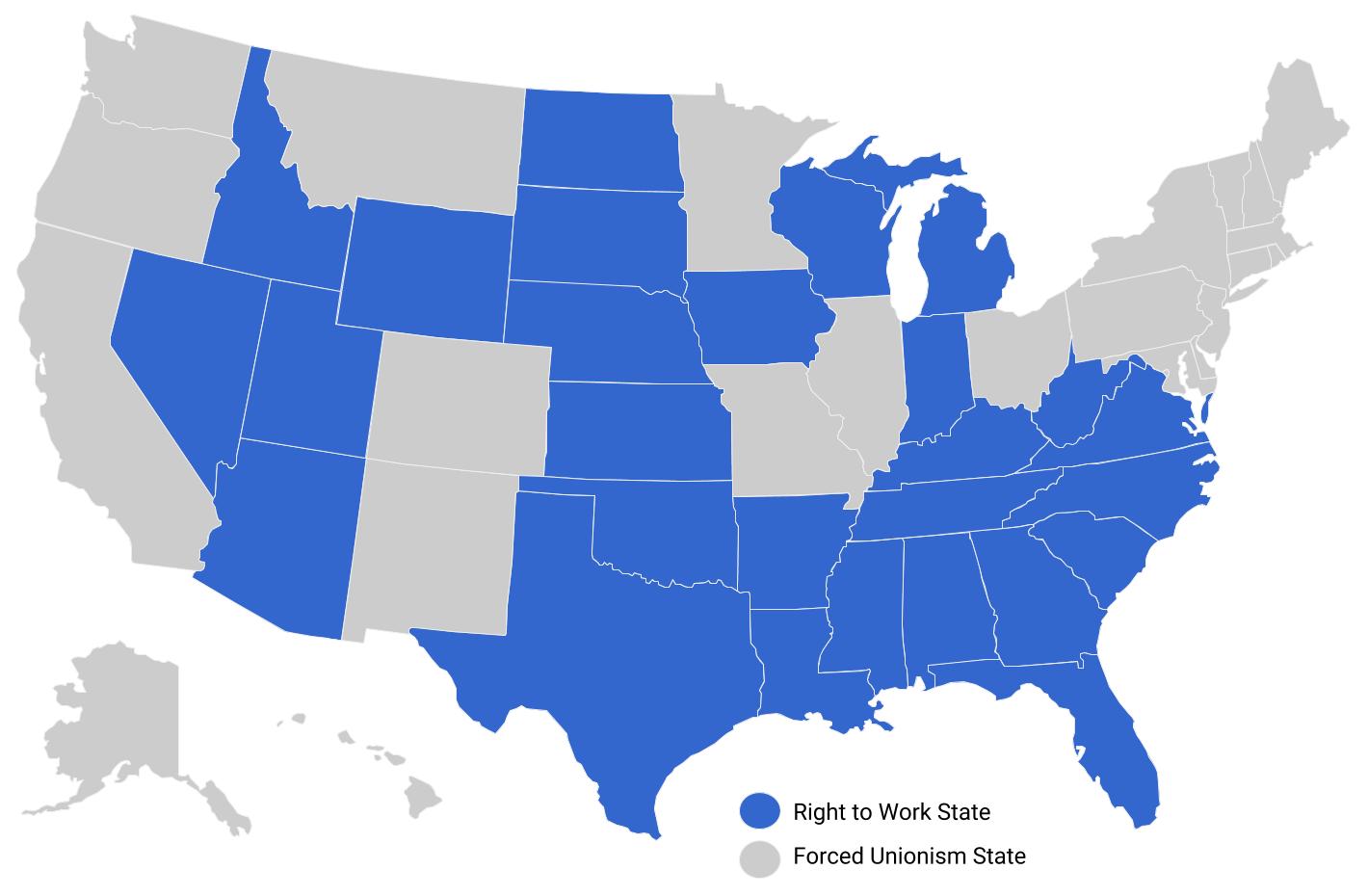
An economic outlook based on a state’s current standing in 15 state policy variables from the American Legislative Exchange Council (Stephen Moore, Art Laffer, and Jonathan Williams). Utah, Idado, North Dakota, and Nevada are the top four states for economic outlook and New York, Vermont, Illinois and California are the top four bottom states. Here s a graphic showing what the two groups have in common:


I have no idea where they get these numbers. Old Testament?
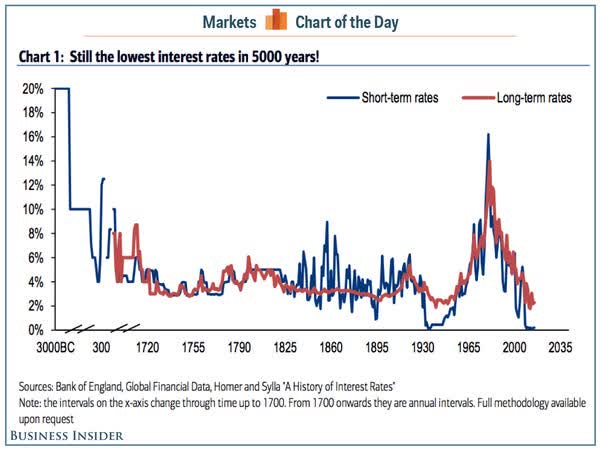
5000 years of interest rates COTD

Friday, February 28, 2020

Law and Order


                                Law and Order


The debate of human structure in an indifferent universe will go on, fallacy or not.

Diedre McCloskey, from her debate with Binyamin Appelbaum.

Mr. Appelbaum says, “the marketplace is not a state of nature.” 

Yes it is. All humans trade, from about age eight on. The earliest evidence of trade comes from the Blombos Cave in South Africa, 70,000 years ago.

The market, he says, “is an artifact of society.” Sure, but so is art and language and journalism. “There is no ‘spontaneous order,’” he asserts—with sneering scare-quotes against the absurdity of the very idea that free adults could accomplish anything without coercion—as though art and language and journalism were not also spontaneous orders. “Markets must be constituted, the rules must be enforced,” by implication, by a state. 

Wrong again. Markets arise as spontaneous orders on the analogy with language in all societies, in prisons, in medieval market fairs, in the rough justice of exchanging books and snow-blowers and cups of flour among neighbors.

Thursday, February 27, 2020

The Other Renewable


                                                     The Other Renewable

An energy startup in Oregon wants us to rethink our reluctance to embrace nuclear energy, Wired reports. NuScale Power studies new reactor technology from a lab on the Oregon State University campus—the same university where the 2019 climate crisis petition began. Their cutting-edge reactor is tiny and, its proponents insist, much safer than our existing notions of nuclear energy lead us to believe.

The oldest operating U.S. nuclear power reactor opened in 1969, and even the newest powered on in the mid-1990s. One completed in 2016, started construction back in 1973. “Only two new reactors are under construction in the U.S., but they’re billions of dollars over budget and years behind schedule,” Wired reports.

Like our aging and increasingly dangerous infrastructure, these nuclear plants need to be comprehensively updated or replaced, and soon.

Even so, nuclear power accounts for two-thirds of the United States’s total renewable power output, meaning any reactor that reaches end of life can significantly reduce our amount of renewable energy. NuScale’s next generation nuclear reactor is tiny by comparison to today’s operating reactors in the U.S. It’s safe to install in clusters according to the power needs of a specific area, and because of its tiny size, these reactors are much easier to encase in safety devices and contain in the event of an emergency.

There are regulatory differences, too. A demonstrably safer nuclear plant wouldn’t need to be built ten miles or more outside of its service area. In fact, the existing regulatory process and paradigm is based on huge reactors that are all going to age out of the system soon. Once new technologies begin to receive approval, regulators can begin to convert or even sundown existing plants and reduce the overall risk.

In the NuScale reactor, a core is kept cool by circulating normal fresh water, as happens in today’s operating nuclear plants on a much, much larger scale. Inside huge nuclear towers, most of the space is dedicated to cooling. The NuScale reactor uses gravity and buoyancy to naturally circulate the cooling water. The size difference is staggering: “About the size of two school buses stacked end to end, you could fit around 100 of them in the containment chamber of a large conventional reactor,” Wired reports. The reactor technology itself isn’t completely different than before, it’s just wildly more efficient and up to date.

The Byron plant generates 2,450 megawatt electrical (MWe) with two gigantic traditional towers. The largest reactors in the world top out at about 8,000 MWe. Each NuScale reactor rates 60 MWe, which sounds small because the reactor is small by design. Plants can install dozens at a time.

Or, even better, our army of about 100 nuclear plants around the U.S. can be turned into 1,000 small plants that provide more local power with less distance to travel. The Byron plant supplies millions of people up to 100 miles away, which has been fine, but local power bleeds less energy in storage, transit, and other overhead energy costs.

The modular nuclear reactors have 12,000 pages of technical information wending its way through the Nuclear Regulatory Commission. In the meantime, they're promising a clean, plentiful, cutting-edge energy source they say is just as good as wind and solar without the pitfalls. Only time will tell.

Source: Wired

Wednesday, February 26, 2020

Medallions


                                     Medallions


Freedom comes with risks but here's a little story from MSN News that shows that your local friendly government--along with its closest friends--can raise the risk a lot higher when it is to their advantage:


New York must pay US$810 million to its debt-ridden cabbies, the state attorney general said Thursday, accusing the city of fraudulently inflating the value of permits needed to drive its famed yellow taxis.

Letitia James, head prosecutor for the state of New York, said an investigation by her office showed that the auction price of thousands of permits, known as medallions, had been artificially inflated by hundreds of millions of dollars between 2004 and 2017.

The attorney general’s office alleged that the Taxi and Limousine Commission knew in 2011 that the price of medallions had passed actual value.

Yet the administrative body “published false and misleading medallion prices” in a number of cases, James’ office said, causing the price of a single medallion at auction to spike from US$283,300 in 2004 to US$965,000 in 2014.

The city allowed brokers and top players to collude on prices, the prosecutor said, as the TLC encouraged drivers to use the medallions as collateral for loans.

The state’s prosecutor said medallion prices were fraudulently set so high that drivers could not pay them off with their earnings from cab operation regulated by the city itself.

“These taxi medallions were marketed as a pathway to the American Dream, but instead became a trapdoor of despair for medallion owners harmed by the TLCs unlawful practices,” James said in a statement.

“The very government that was supposed to ensure fair practices in the marketplace engaged in a scheme that defrauded hundreds of medallion owners, leaving many with no choice but to work day and night to pay off their overpriced medallions.”

New York’s taxi industry has been upended by the arrival of ride-hailing platforms like Uber and Lyft.

More than 950 licensed taxi drivers have declared personal bankruptcy since 2016, according to a New York Times investigation of court records published last year.

Recent years have also seen a spate of suicides from cab drivers suffering under crushing debt.

The sum of US$810 million corresponds to the city’s revenues from medallion sales and resale tax, according to the attorney general, and must be paid within 30 days or James’ office intends to sue, it said.

Contacted by AFP, New York City Hall did not immediately respond.

Tuesday, February 25, 2020

Renewables


                                    Renewables

We need to show more admiration for those who want to replace petroleum with stuff we don't have. This list gives an idea of the size of the project:


From the article “U.S. Government continues to dump funds into an electrical sinkhole” by Ronald Stein, founder, and ambassador for Energy & Infrastructure of PTS Advance:

"Let’s be clear about what that means. First, it’s not renewable energy, it’s only renewable electricity, and more accurately its only intermittent electricity. Renewables have been the primary driver for residents of Germany, Australia, and California behind the high costs of electricity. Second and most important is, electricity alone is unable to support militaries, aviation, and merchant ships, and all the transportation infrastructure that supports commerce around the world.

Everyone knows that electricity is used extensively in residential, commercial, transportation, and the military, to power motors and lite the lights; but it’s the 6,000 products that get manufactured from crude oil that are used to make those motors, lights, and electronics (see table above). Noticeable by their absence, from turbines and solar panels, are those crude oil chemicals that renewables are currently incapable of providing.

We’ve had almost 200 years to develop clones or generics to replace the products we get from crude oil such as medications, electronics, communications, tires, asphalt, fertilizers, military, and transportation equipment. The social needs of our materialistic societies are most likely going to remain for all those chemicals that get manufactured out of crude oil, that makes everything that’s part of our daily lifestyles, and for continuous, uninterruptable, and reliable electricity from coal or natural gas generation backup
."

Monday, February 24, 2020

Rags to Riches: An American Story


                    Rags to Riches: An American Story


Bernie Sanders’ net worth is estimated to be around $2 million as of 2017. That is not from his meticulously saving his paychecks in his youth.

Sanders didn’t collect a steady paycheck before being elected to office as mayor of Burlington, Vt., in 1981. After graduating from the University of Chicago in 1964, with a BA in political science, Sanders did work a series of odd jobs before his political career began. Some of the positions he held include an aide at a psychiatric hospital, a freelance writer, a preschool teacher, and a carpenter. The Sanders campaign did not respond when asked if any of these jobs were considered full-time positions.

In 1974, Sanders did run for political office while collecting unemployment benefits.

Sanders was the primary sponsor of seven pieces of legislation that were enacted, according to records:

H.J.Res. 132 (102nd): To designate March 4, 1991, as "Vermont Bicentennial Day."

H.R. 1353 (102nd): Entitled the "Taconic Mountains Protection Act of 1991."

H.J.Res. 129 (104th): Granting the consent of Congress to the Vermont-New Hampshire Interstate Public Water Supply Compact.

H.R. 5245 (109th): To designate the facility of the United States Postal Service located at 1 Marble Street in Fair Haven, Vermont, as the "Matthew Lyon Post Office Building."

S. 893 (113th): Veterans’ Compensation Cost-of-Living Adjustment Act of 2013.

S. 2782 (113th): A bill to amend title 36, United States Code, to improve the Federal charter for the Veterans of Foreign Wars of the United States.

S. 885 (113th): A bill to designate the facility of the United States Postal Service located at 35 Park Street in Danville, Vermont, as the "Thaddeus Stevens Post Office."

It has always been said that one of the merits of this country is that anyone can grow up and run for President. In this instance, just anyone has.

Sunday, February 23, 2020

Sunday/New Laws and Hyperbole


                             Sunday/New Laws and Hyperbole

Gandhi said, “Everyone in the world knows that Jesus and His teaching are non-violent, except Christians.” 75 percent of Christians believe in capital punishment because they think we can stop the killing by killing the killers.

The tribal law of retaliation, (Lex Talionis = Tit-for-Tat), was written by the ancient lawmaker Hammurabi during the period 2285-2242 BC. It has been ridiculed as crude and primitive but probably was a real philosophical advance for the time. It was actually an effort to eliminate tribal justice that would hold groups responsible for individual acts and individuals for group acts, for example, Hatfield and McCoy thinking. (This "primitive " thinking is now returning in Western politics, shamelessly.)

It is believed that the Mosaic law absorbed this thinking during the Jews ' captivity in Egypt and it became Old Testament law. instead of mutilating or murdering all the members of the offender’s family or tribe, one should discover the offender and only punish him or her with an equal mutilation or harm. Later, a milder version of this law was substituted that demanded monetary compensation, as decided by a judge, in place of physical punishment.

What Christ says in today's gospel is revolutionary. He says, “You have heard that it was said, "An eye for an eye and a tooth for a tooth. But I say to you, offer no resistance to one who is evil." This is the "Turn the other cheek" gospel where one is to forgive the attacker, give away your clothes until you are naked and pray for those who persecute you.

This is simply different thinking, revolutionary in the West. And it is simply overwhelming as a way to live; one might say even "unhuman."

Yes, as Christ Himself says later in the sermon. "So be perfect, just as your heavenly Father is perfect.” That is hyperbole. We can not be perfect. He is not asking us to change what we are, only to see an ideal to approach.
It's like how Flannery O'Connor explained her hyperbolic imagery: Sometimes the audience is so dense you need a two-by-four.