Showing posts with label artists. Show all posts

Thursday, August 27, 2026

'39

On this day:

479 BC
Greco-Persian Wars: Persian forces led by Mardonius are routed by Pausanias, the Spartan commander of the Greek army in the Battle of Plataea.
410
The sacking of Rome by the Visigoths ends after three days.
1776
The Battle of Long Island: in what is now Brooklyn, New York, British forces under General William Howe defeat Americans under General George Washington.
1793
French counter-revolution: the port of Toulon revolts and admits the British fleet, which lands troops and seizes the port leading to Siege of Toulon.
1859
Petroleum is discovered in Titusville, Pennsylvania leading to the world’s first commercially successful oil well.
1883
The eruption of Krakatoa
1928
The Kellogg-Briand Pact outlawing war is signed by the first 15 nations to do so. Ultimately sixty-one nations will sign it. (Can you imagine?)
1962
The Mariner 2 unmanned space mission is launched to Venus by NASA.
1979
A Provisional Irish Republican Army bomb kills British World War II admiral Louis Mountbatten and three others while they are boating on holiday in Sligo, Republic of Ireland. Shortly after, 18 British Army soldiers are killed in an ambush near Warrenpoint, Northern Ireland


***

"In my whole life, I have known no wise people who didn't read all the time — none, zero." --Charlie Munger.

***

Cybercriminals are utilizing AI to create high-quality fake websites, imitating prominent retailers such as Amazon and PayPal, as well as financial institutions. Some cybersecurity experts worry AI tools will supercharge these scams by enabling criminals with limited technical skills to create nearly perfect fake sites in minutes.--WSJ

***

Stovepiping: noun

Multiple meanings, including firearm and computer application.

In its information management context, 
stovepiping refers to the practice of passing or channeling information up and down within a hierarchy or organization without sharing it across different levels or departments. This can lead to isolated 'silos' of information, lack of communication, and inefficiency in the organization. With people with guns, this can be dangerous.

This was the term applied to the separated functions of CIA and FBI believed to contribute to the 9-11 disaster.

It seems to be the desire of local municipalities in their nullification policy toward federal officers acting locally.

***

“Your Social Security is safe. You can write that down and take it home to mama,” Sen. John Kennedy (R-La.) said this summer. “All we got to do is go take the money out of the general fund, which we always do.”
There will be a crisis of financing the idiotic social benefits in this country. Social security will be the first major test of the country's coming financial problems. This is the opinion of an influential Senator: The solution to one of America's great problems is to keep doing what we're doing.

***

And, with the same needle in the same vein, Rocket Labs, at $68 per share, is 3,225X forward PE.

***

A federal judge in Houston has blocked Texas’ law prohibiting explicit sexual performances in front of children, finding it unconstitutional.

***


'39

These are the lyrics of the song "'39"
by Queen, about very rapid travel into space and the stars, with time-dilation effects on the return voyage and the attendant regret on return, where all he knows is gone. It's a strange song with a sea chanty lilt.

The songwriter is Brian May, the group guitarist who has a Ph.D in astrophysics.


Lyrics '39

In the year of '39, assembled here the volunteers
In the days when lands were few
Here the ship sailed out into the blue and sunny morn
The sweetest sight ever seen
And the night followed day
And the story tellers say
That the score brave souls inside
For many a lonely day sailed across the milky seas
Ne'er looked back, never feared, never cried
Don't you hear my call though you're many years away
Don't you hear me calling you
Write your letters in the sand
For the day I take your hand
In the land that our grandchildren knew
In the year of '39 came a ship in from the blue
The volunteers came home that day
And they bring good news of a world so newly born
Though their hearts so heavily weigh
For the Earth is old and grey, little darling, we'll away
But my love, this cannot be
Oh, so many years have gone though I'm older but a year
Your mother's eyes, from your eyes, cry to me
Don't you hear my call though you're many years away?
Don't you hear me calling you?
Write your letters in the sand for the day I take your hand
In the land that our grandchildren knew
Don't you hear my call though you're many years away?
Don't you hear me calling you?
All your letters in the sand cannot heal me like your hand
For my life
Still ahead
Pity me


Friday, July 24, 2026

O. Henry


On this day, many things:
1148
Louis VII of France lays siege to Damascus during the Second Crusade.
1411
Battle of Harlaw, one of the bloodiest battles in Scotland, takes place.
1487
Citizens of Leeuwarden, Netherlands strike against ban on foreign beer.
1534
French explorer Jacques Cartier plants a cross on the Gaspé Peninsula and takes possession of the territory in the name of Francis I of France.
1567
Mary, Queen of Scots, is forced to abdicate and is replaced by her 1-year-old son James VI.
1715
A Spanish treasure fleet of 10 ships under Admiral Ubilla leaves Havana, Cuba for Spain. Seven days later, 9 of them sink in a storm off the coast of Florida. A few centuries later, treasure is salvaged from these wrecks.
1847
After 17 months of travel, Brigham Young leads 148 Mormon pioneers into Salt Lake Valley, resulting in the establishment of Salt Lake City. Celebrations of this event include the Pioneer Day Utah state holiday and the Days of '47 Parade.
1864
American Civil War: Battle of Kernstown – Confederate General Jubal Anderson Early defeats Union troops led by General George Crook in an effort to keep them out of the Shenandoah Valley.
1901
O. Henry is released from prison in Austin, Texas after serving three years for embezzlement from a bank.
1911
Hiram Bingham III re-discovers Machu Picchu, “the Lost City of the Incas”. Was it lost?
1915
The passenger ship S.S. Eastland capsizes while tied to a dock in the Chicago River. A total of 844 passengers and crew are killed in the largest loss of life disaster from a single shipwreck on the Great Lakes. How is that possible?
1922
The draft of the British Mandate of Palestine was formally confirmed by the Council of the League of Nations; and which came into effect on 26 September 1923. The beginning of the end.
1923
The Treaty of Lausanne, settling the boundaries of modern Turkey, is signed in Switzerland by Greece, Bulgaria and other countries that fought in World War I.
1929
The Kellogg-Briand Pact, renouncing war as an instrument of foreign policy, goes into effect (it is first signed in Paris on August 27, 1928 by most leading world powers). This is truly precious.
1943
World War II: Operation Gomorrah begins: British and Canadian airplanes bomb Hamburg by night, those of the Americans by day. By the end of the operation in November, 9,000 tons of explosives will have killed more than 30,000 people and destroyed 280,000 buildings.
1969
Apollo program: Apollo 11 splashes down safely in the Pacific Ocean.
1974
Watergate scandal: the United States Supreme Court unanimously ruled that President Richard Nixon did not have the authority to withhold subpoenaed White House tapes and they order him to surrender the tapes to the Watergate special prosecutor.
And, finally, 2009
The MV Arctic Sea, reportedly carrying a cargo of timber, is allegedly hijacked in the North Sea by pirates, but much speculation remains as to the actual cargo and events. An astonishing story that might be gun-running.

***

“It’s very hard to distinguish AI security incidents from AI marketing, and that’s actually a big problem going forward,” --Matthew Green, a security expert at Johns Hopkins University.

***

The “paperclip maximiser” is a thought experiment invented by philosopher Nick Bostrom in 2003.

He describes a scenario in which people invent an AI whose only goal is to make as many paperclips as possible. But he illustrates how that could quickly become horrifying: it might wipe out the humans that could potentially switch it off and stop it making paperclips, for instance, or it could realise that the human body contains material that could be turned into paperclips and so decide to harvest them and use them for that.

***

A six-year-old, who had a genetic mutation that affected her neurodevelopment, received a gene therapy treatment designed to correct the underlying defect at Shanghai Xinhua Hospital in March 2025, according to an investigation by Science and Retraction Watch. She died days later from a severe immune reaction linked to the therapy, the magazine reported, citing documents and accounts provided by the girl’s parents.

***

Has anyone heard a coherent, sensible argument against Voter ID laws?

***

Only two companies from the Dow Industrial Average in 1976 remain on the Dow today, Procter & Gamble and Chevron, nee Standard Oil.

***

What in heaven's name is the government doing testing the testosterone levels of its citizens?

***


O. Henry

This day has some gravity. The 
S.S. Eastland. Operation Gomorrah. The Kellogg-Briand Pact. The British Mandate. The return of Apollo 11.  The MV Arctic Sea hijacking. 
And O. Henry, the talented author, was released from prison on this day.

O. Henry (the pen name of William Sydney Porter), author of “The Gift of the Magi,” was one of the most celebrated short story writers of his generation. His legacy is celebrated every year by the O. Henry Prize for Fiction. He got his start in prison, while serving time for embezzling funds from the First National Bank in Austin, Texas, where he had worked as a teller.

Much later, a 1916 report characterized the bank in question as “carelessly managed,” and revealed that “the patrons used to enter, go behind the counter, take out one hundred or two hundred dollars and say a week later, ‘Porter, I took out $200, last week. See if I left a memorandum of it. I meant to.’” The Times report claims that Porter, who by the time he was charged had moved to Houston and taken a job as a columnist with The Daily Post, resigned before one of the “misappropriations with which he was charged,” and that if he had simply gone back to Austin when he was summoned to stand trial, he would have been acquitted.

Instead, he took a train to New Orleans, and then hopped on a fruit steamer headed for Honduras, where the law could not reach him. But in February of 1897, he learned that his wife was very ill, and he returned to the States to care for her. His wife died in July, and Porter was convicted the following year, and in March 1898, sentenced to five years in prison for embezzlement.

In prison, Porter “did his first serious literary work,” as the Times puts it. In order to be able to send money home to support his daughter Margaret, he wrote and published 14 short stories, under pen names, including the one with which he would become famous: O. Henry.

Porter was released early for good behavior on July 24, 1901, and returned to Pittsburgh to live with his daughter and his in-laws, before moving on to New York City. Most importantly, he kept writing, and in 1904 published his first collection of short stories, Cabbages and Kings, followed two years later by The Four Million, which would include some of his most enduring tales, including “The Gift of the Magi.” He was incredibly prolific; he would keep publishing until he died in 1910.
(from Lit Hub)

Friday, April 4, 2025

White Male Writers


Schools in Beijing will introduce AI courses and teaching methods into the primary and secondary school curriculum starting September, to nurture young talent and boost growth in the advancing sector.

***

Catholic suggestions for filling Jubilee sacrifice include "social media fasting."

***

A paralysed man can stand on his own after receiving an injection of neural stem cells to treat his spinal cord injury.

***


White Male Writers

It’s easy enough to trace the decline of young white men in American letters—just browse The New York Times’s “Notable Fiction” list. In 2012 the Times included seven white American men under the age of 43 (the cut-off for a millennial today); in 2013 there were six, in 2014 there were six.

And then the doors shut.

By 2021, there was not one white male millennial on the “Notable Fiction” list. There were none again in 2022, and just one apiece in 2023 and 2024 (since 2021, just 2 of 72 millennials featured were white American men). There were no white male millennials featured in Vulture’s 2024 year-end fiction list, none in Vanity Fair’s, none in The Atlantic’s. Esquire, a magazine ostensibly geared towards male millennials, has featured 53 millennial fiction writers on its year-end book lists since 2020. Only one was a white American man.

Over the course of the 2010s, the literary pipeline for white men was effectively shut down. Between 2001 and 2011, six white men won the New York Public Library’s Young Lions prize for debut fiction. Since 2020, not a single white man has even been nominated (of 25 total nominations). The past decade has seen 70 finalists for the Center for Fiction’s First Novel Prize—with again, not a single straight white American millennial man. Of 14 millennial finalists for the National Book Award during that same time period, exactly zero are white men. The Wallace Stegner Fellowship at Stanford, a launching pad for young writers, currently has zero white male fiction and poetry fellows (of 25 fiction fellows since 2020, just one was a white man). Perhaps most astonishingly, not a single white American man born after 1984 has published a work of literary fiction in The New Yorker (at least 24, and probably closer to 30, younger millennials have been published in total).--Savage

Monday, April 12, 2021

The Artist at His Rightful Place At Last


                                    The Artist at His Rightful Place At Last


How do we evaluate a culture? By its fruits you shall know them? Are the economic buds really the reflection of its roots? Is simple survival the criterion, as claimed by some?

A culture's art might be promising; we feel we have an idea of the ancient Greeks and their world through their art. We can imagine the average fieldhand standing in Athens with wide eyes before the Parthanon or The Artemision Bronze. What, for example, does modern art have to say to the average guy? Is Pollock or John Cage our culture's ambassador to the future?

“...a performative model of subject formation cannot be thought apart from its implication in regulatory practices operating within discursive regimes that circumscribe the ‘materiality’ of the subject through the citationality of norms.”

“The foreclosure of the performative in the Victorian novel is thus the condition of possibility of its disciplined re-emergence as the illocutionary hallucination of the performative as a material event of subjectivity that emerges in a discursive nexus that can be generally named ‘impersonation.’ ”

These quotes are from a book published by the University of Michigan Press about “the novel.” They read like a physics paper. From the Greeks through Shakespeare through the transcendentalists to Hemmingway, the hallmark of literature has been its approachability, the accessibility of the word to people it was felt to benefit. Clearly, those days are gone. Literature is now obscure. Inbred. Unapproachable. And most important, elite. The only thing absent is acronyms.

What, if anything, does that mean about us?

Monday, July 13, 2020

One Ring


Certainly governments have many failings, regardless of the type of government. One generally agreed upon common governmental function has become education, particularly early education. Whoy wouldn't the government decide to make their efforts in education, a testable effort with testable results, a proving ground of government's value?

                                                             One Ring

From Gareth Harvey on Twitter @OptimoPrincipi
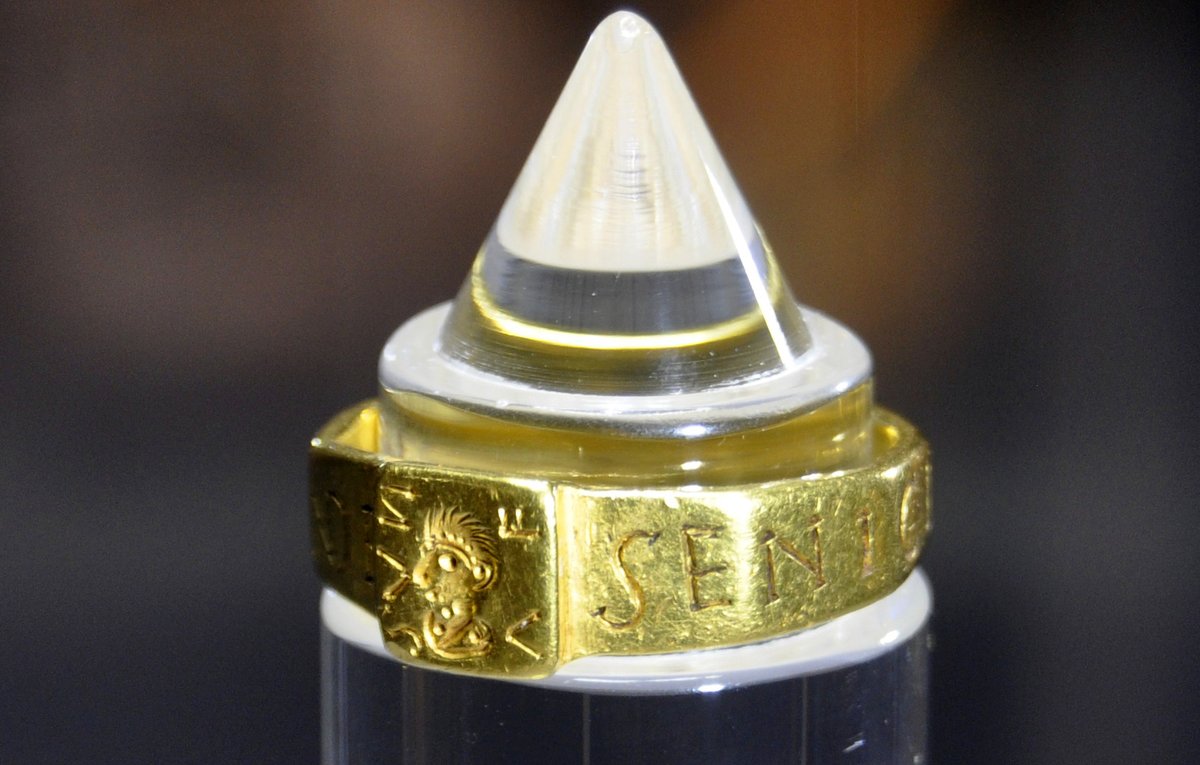
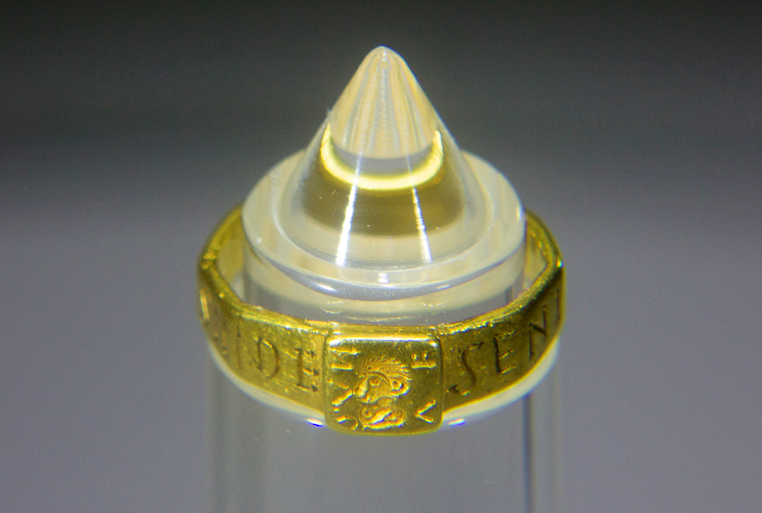
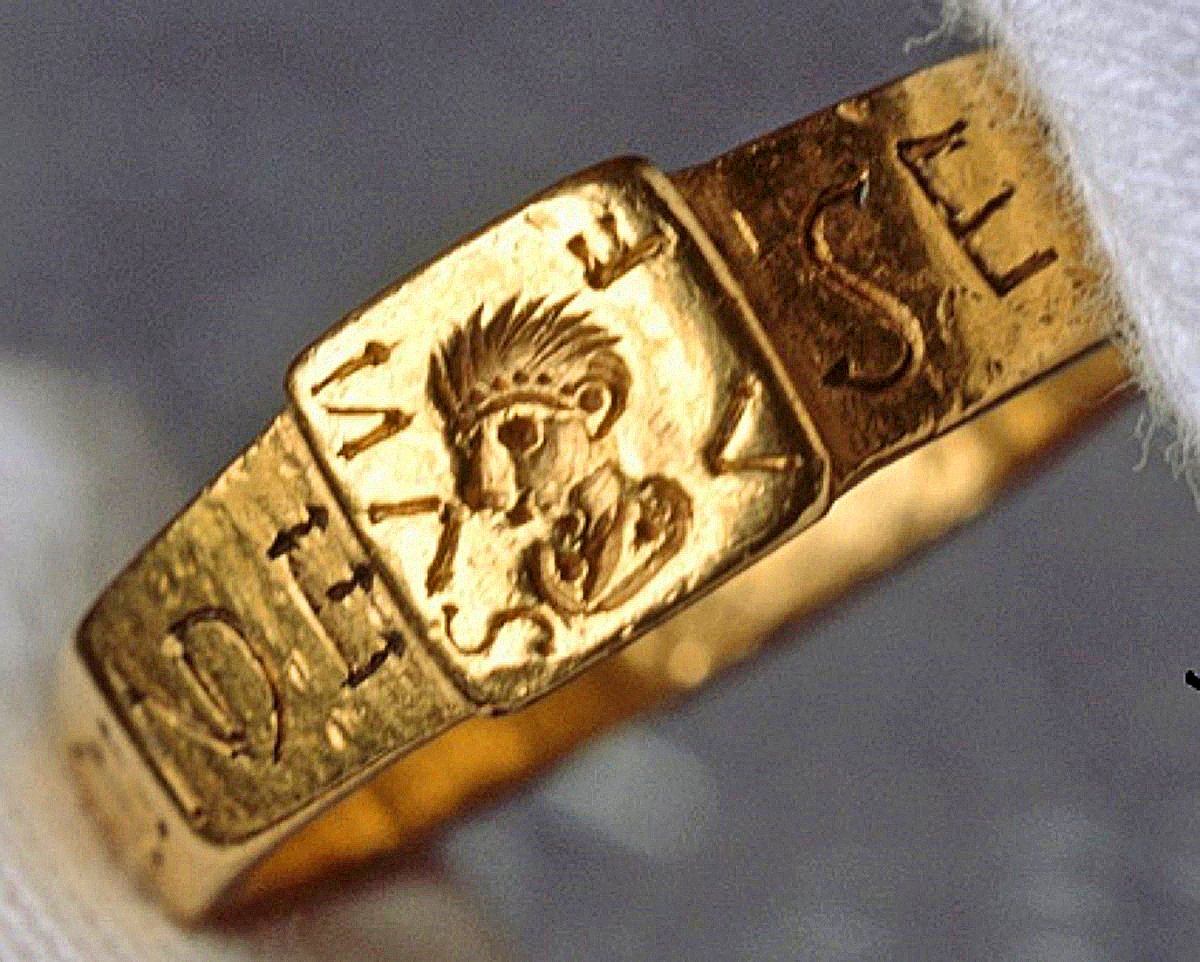
1) A stranger than fiction Roman ring mystery thread: this enigmatic Roman gold ring was found in a ploughed field near Silchester in 1785. The square bezel has a portrait of the pagan goddess Venus, inscribed backwards SUNEV for use as a signet ring by the owner. Curiously...


2) ...around the ten-sided ring is crudely inscribed the identity of a later Christian owner, "Senicianus" who it proclaims with spelling errors "lives in god" (vivas in deo). A ring passing from pagan to Christian hands - certainly possible in the 4th century - but remarkably...


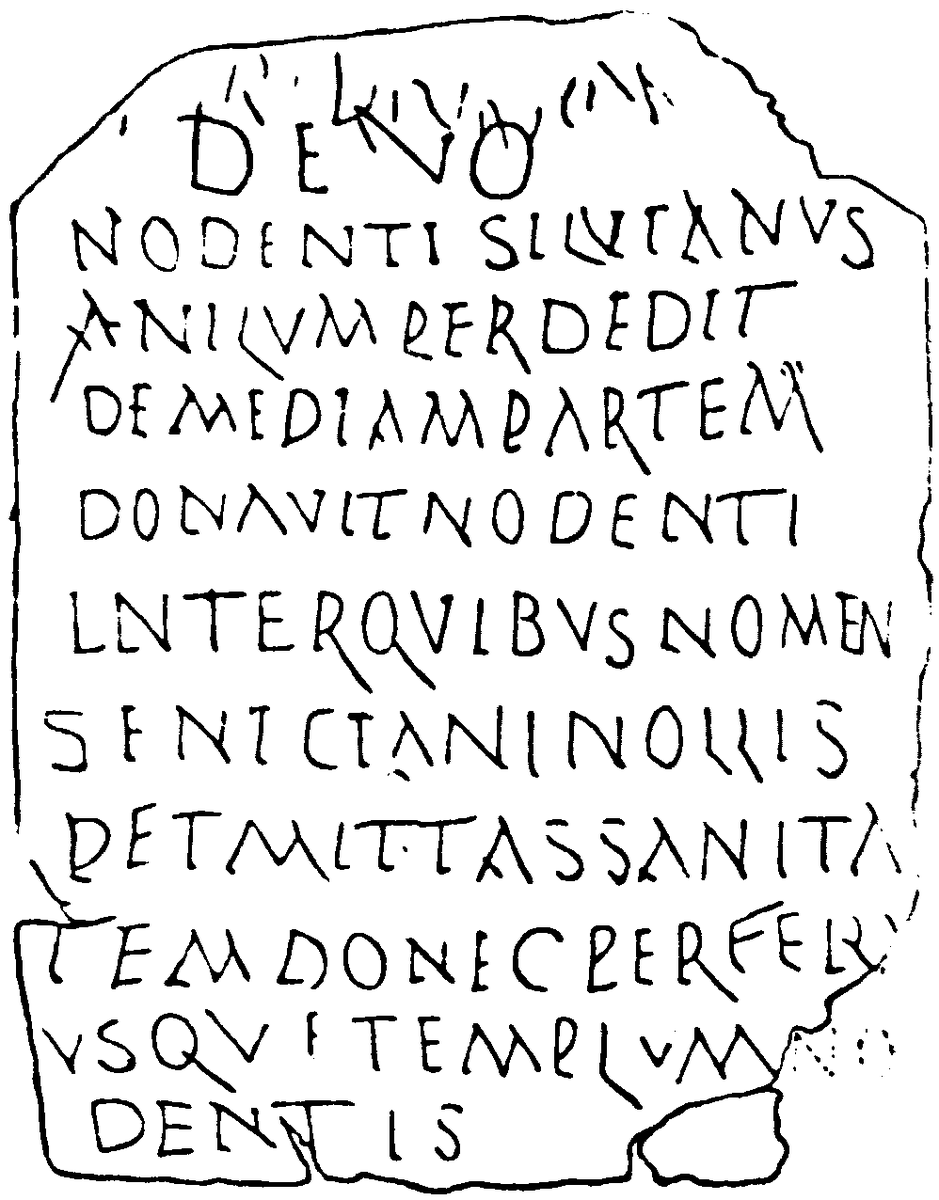
3)... at a temple to the mysterious British god “Nodens” 80 miles away in Lydney, Gloucestershire, a lead curse tablet (defixio) was later discovered. On the tablet a man named “Silvianus” complains that his gold ring was stolen and he suspects “Senicianus” was the culprit! ...


4) Silvianus deposited the curse tablet and donated at the temple half the value of his lost ring, in the hope that the gods would "permit no good health to Senicianus." In 1929 the archaeologist Mortimer Wheeler would make a connection between this curse and the gold ring...


5) Wheeler consulted a certain young J.R.R. Tolkien, Professor of Anglo-Saxon at Oxford University, to work on the etymology of the curious deity Nodens and explore the possible connections with the enigmatic Roman gold ring...


6) Soon afterwards Tolkien would begin creating his legendarium of Middle-earth with both “The Hobbit” and “The Lord of the Rings” revolving around the magical, golden and often-stolen One Ring that grants the wearer invisibility. Had Tolkien been inspired by the Silvianus ring?


7) We might fancifully conclude then that in the mid 4th century AD, Silvianus - a late-Roman man still clinging on to the old pagan gods, had his beloved Venus ring stolen from him by a Christian that he knew named Senicianus. The pious thief then rededicated the pagan ring...


8) ...with his own ironic inscription, saying he "lives in God". The bitter Silvianus then travelled to an ancient pagan temple to deposit a curse on the Christian thief. We know the ring was subsequently lost but are left to imagine if fate ever caught up with Senicianus...


9) Two millienia later, both the ring and the curse on its thief are both discovered 80 miles apart. Wheeler and Tolkien, titans in their fields, analyse the mysterious artefacts and just maybe, the gold ring goes on to inspire one of the greatest works of fantasy literature. END


For those interested in seeing these ancient artefacts...
The Silvianus Ring is displayed at @TheVyneNT, Hampshire. The curse tablet is displayed at Lydney Park Estate, Gloucestershire  https://www.lydneyparkestate.co.uk/lydney-park-gardens …
 

Friday, September 27, 2019

The Children

It is precisely those who (plausibly) preach prudence in manipulating the natural world who are most cavalier about smashing and rebuilding social institutions. --Munger


Mom and I had dinner at The Vandal last night. First time we've sat down in a week. The place was earnest and the food was mostly good.
We go to Montreal today. We'll meet Liz, Ned and Caroline. I did not manage the online checkin well.

The Government and the Press have finally completely befuddled me. This new impeachment effort; is this what is meant by "jumping the shark?" Do you just keep the process going, rolling from one innuendo to another, hoping one gets traction? Does a partisan whistleblower carry more weight than a partisan retired British spy? And at what point do your partisan failures lose you the moral high ground?

Carden writes, "Price gouging laws are effectively knowledge embargoes." Price increases aren't arbitrary impositions on the part of the callous and the mean. As Tyler Cowen and Alex Tabarrok explain, "a price is a signal wrapped up in an incentive." Price is how markets communicate.

In the 1980s, the national debt amounted to 30 percent of US GDP; by the mid-1990s, it was up to 65 percent. Today we're at more than 100 percent, and rising. Merely paying the interest on the debt will cost Americans almost $400 billion this year. And that's at today's super-low interest rates. If those rates go up — when those rates go up — the government's interest obligations will skyrocket. By 2025, former Pennsylvania Governor Ed Rendell and Maya MacGuineas of the Committee for a Responsible Federal Budget have projected, interest on the national debt will surpass the defense budget.
    

The last twenty years have disrupted investing generalities. This is an interesting article from M.W.. Edward McQuarrie, a professor emeritus at the Leavey School of Business at Santa Clara University in California, has painstakingly reconstructed U.S. stock- and bond market returns back to the late 1700s. Except for 40 of the past 220 years — 1942 through 1982 — stocks and bonds have produced essentially equal returns.

The net effect of his findings is to reduce estimates of what researchers refer to as the “equity premium” — the margin by which stocks outperform bonds. Previous research had found this premium to be much larger — as much as six or more annualized performance points, according to some studies. McQuarrie’s best guess, based on the entire period since 1793, is that the premium is just 1.7 annualized percentage points. The more shocking implication of McQuarrie’s data is not that the equity premium is far smaller than previously thought. It’s that, for some periIf our investment horizons are like the average experience between 1793 and 1942, or since 1982, then there may be no equity premium. If we do decide to make a big bet that stocks will outperform bonds, then we in effect are betting that the future will be more like the 1942-1982 experience than the decades before or since.ods over a lifetime and longer (think about your heirs), there is no equity premium at all. 


                                     The Children
Life is the abstract meeting policy. Kipling wrote this poem on the death of his only child. On September 27, 1915, Second Lieutenant John Kipling of the British army, the son of Nobel Prize-winning author Rudyard Kipling, was killed at the Battle of Loos, in the Artois region of France.


The Children


By Rudyard Kipling

1914-18("The Honours of War"—A Diversity of Creatures)
These were our children who died for our lands: they were dear in our sight.
    We have only the memory left of their home-treasured sayings and laughter.
    The price of our loss shall be paid to our hands, not another’s hereafter.
Neither the Alien nor Priest shall decide on it.    That is our right.
        But who shall return us the children?

At the hour the Barbarian chose to disclose his pretences,
    And raged against Man, they engaged, on the breasts that they bared for us,
    The first felon-stroke of the sword he had long-time prepared for us—
Their bodies were all our defence while we wrought our defences.

They bought us anew with their blood, forbearing to blame us,
Those hours which we had not made good when the Judgment o’ercame us.
They believed us and perished for it.    Our statecraft, our learning
Delivered them bound to the Pit and alive to the burning
Whither they mirthfully hastened as jostling for honour—
Nor since her birth has our Earth seen such worth loosed upon her.

Nor was their agony brief, or once only imposed on them.
    The wounded, the war-spent, the sick received no exemption:
    Being cured they returned and endured and achieved our redemption,
Hopeless themselves of relief, till Death, marveling, closed on them.

That flesh we had nursed from the first in all cleanness was given
To corruption unveiled and assailed by the malice of Heaven—
By the heart-shaking jests of Decay where it lolled in the wires—
To be blanched or gay-painted by fumes— to be cindered by fires—
To be senselessly tossed and retossed in stale mutilation
From crater to crater.    For that we shall take expiation.
        But who shall return us our children?