Tuesday, July 12, 2016

Sabermetrics

Sabermetrics is the empirical analysis of baseball, especially baseball statistics that measure in-game activity. The term is derived from the acronym SABR, which stands for the Society for American Baseball Research. It was coined by Bill James, who is one of its pioneers and is often considered its most prominent advocate and public face. (wiki)
Sabermetrics has revolutionized baseball. The game is being approached as a science. Throughout the game, statisticians are applying analytics to speed, strength, power, OBPs--everything they can evaluate to get an edge in the drafting of players, in matching them up on teams and matching them against each other.
Yet, when it is all said and done and all the information is in, they still play the game. Why?

First, unlike physics and other natural sciences, the variables the statistician can measure may not be the important ones.  So they emphasize the few things they can measure because they are easier to study. No statistician would estimate that  Kansas City would have been successful with their aggressive approach to hitting in the World Series last year. Their persistent success in the tournament last year was simply off the charts, in violation of most sabermetric hitting laws.
Second, while the statistician can produce general predictions, unlike physicists they cannot generate precise results. No statistician would estimate that Harrison would be Pittsburgh's leader in RBIs or McCutchen would be hitting .225.
The third reason baseball differs from physics relates to the first two: the information necessary to test detailed baseball predictions is impossible to gather. Usually right-handed hitters have an advantage against left-handed pitchers but that is not true with the Pirates' left-handed Watson who is much more effective against right-handed hitters. There is no material difference between the very average Arrietta from 2013 and the devastating Arrietta from 2015. St. Louis' Diaz' success had no augury in the minors. These distinctions are simply not analyzable. The factors are just not understood.

So we analyze as well as we can but still play the game because we know that our information, however voluminous, is flawed and incomplete. That is why we enjoy the competition after everything is analyzed: Significant uncertainty remains.

Now read the above again and substitute "economics" for "baseball."

Monday, July 11, 2016

The Pope and Zika

The Pope said some things that were quite shocking recently but they seemed to be drowned in the mandatory Trump mania he foolishly joined.
He was asked about contraception with respect to the Zika virus.
Francis drew a parallel to the decision taken by Pope Paul VI in the 1960s to approve giving nuns in Belgian Congo artificial contraception to prevent pregnancies because they were being systematically raped.
The questioner strangely included abortion in the question but Francis distinguished the two. He said, dismissing the abortion question, "On the other hand, avoiding pregnancy is not an absolute evil. In certain cases, as in this one (Zika), such as the one I mentioned of Blessed Paul VI, it was clear."
Francis has tended to downplay the fraught moral hand-wringing over sexual ethics that preoccupied his predecessors, John Paul II and Benedict XVI. He has said the church shouldn't be the "obsessed" with such issues.
This was pretty important because it is so public. How it will fit with the Philadelphia bishop's strange and aggressive sexual stand remains to be seen.

Sunday, July 10, 2016

Sunday 7/10/16

Today's gospel is the Good Samaritan. A priest and a Levite pass by the damaged man and an outcast stops and saves him. Christ is delivering this story with, certainly, a wry smile. Established religion and infrastructure ignore the needy man; only the outsider helps. And he does not stay.

In many respects, it is astonishing that a story that ends in such a political crisis on Calvary is so rarely political. Who is your neighbor?

The ever-practical Margaret Thacher put an interesting spin on this religious proposition. She said:
"No one would remember the Good Samaritan if he'd only had good intentions; he had money as well." This is an astonishingly revealing secular misreading of the parable. Results, indeed, do not matter. The end justifies nothing. Salve is applied, coins exchanged but the physical is nothing more than the three dimensions where the spiritual, like Christ and the Good Samaritan, are passing through.

Saturday, July 9, 2016

Cab Thoughts 7/9/16

"The enemy is the gramophone mind whether or not one agrees with the record that is being played at the moment."--Orwell, in the intro to Animal Farm.

Angela Duckworth’s best-seller, Grit: The Power of Passion and Perseverance, offers a pair of big ideas: that grit—comprising a person’s perseverance and passion—is among the most important predictors of success and that we all have the power to increase our inner grit. These two theses, she argues, apply to military cadets--where she did her first work and developed a predictive testing program-- but also to kids in troubled elementary schools and undergrads at top-ranked universities and to scientists, artists, and entrepreneurs. Duckworth’s book describes a wide array of  “paragons of grit,” people she’s either interviewed or studied from afar: puzzlemasters and magicians, actors and inventors, children and adults, Steve Young and Julia Child. Grit appears in all of them. There are some saying that there is nothing new in the success-hard work ratio. But Duckworth has an optimism--and a rare humility--that itself is winning. The Seahawks have taken her in as a guru.
And a reaction has developed. Some complain that "grit" is a bit too "manly," a bit too assertive. That kind of criticism is very flattering.
After adjusting for inflation, median household income has fallen nearly $5000 since 2007.

For the first time in American history there are more unmarried women than married women. The number of adults age 34 and under who have never been married is nearing 50 percent. In recent years, data showed just 20% of Americans ages 18 to 29 are wedded, compared to nearly 60% in 1960. Additionally, more than 40% of American births are to unmarried women. Among Hispanic women the percent is over 53, and among black women the rate is over 71%.
The last deep-pit coal mine in the U.K. plans to shut down next week, heralding the end of a centuries-old industry that helped fuel the industrial revolution and build the British Empire. Some of this is related to the climate religion but much is not. Pricing is a major factor. The U.K. already imports most of the coal that fuels its power plants, with imports first surpassing local production in 2001. Russia has been the biggest beneficiary of the U.K.'s increased appetite for imported coal, providing 46% of its thermal coal in 2014, according to the U.K. government. Coal supplies roughly one-third of the energy for electricity generation in the U.K., with natural gas and renewable sources making up the rest. Kellingley, operated by U.K. Coal, is the victim of vast market forces that have pushed prices for thermal coal--the kind used to fuel power plants--to their lowest level in ​more than nine years at $45.10 a metric ton, according Rotterdam coal futures traded on the Intercontinental Exchange. It costs Kellingley about $65 to produce a ton of coal, compared with $45 a ton for imported coal, a company official said.
So why, if more expensive coal made coal decline, do people think that arbitrary increase in wages will encourage more work?
The nation’s manufacturers are now producing 47 percent more than they did 20 years ago. What has declined is manufacturing employment, which is 29 percent lower than it was 20 years ago. Producing more output with fewer workers is called higher productivity, which in turn is driven by technological innovation. This change is hard on displaced workers, but it is good for the economy over all. Rising living standards are possible only if productivity increases. The real question remains: How to improve work opportunities? This has been a topic of debate for some of the world's great minds for centuries. Fortunately we have The View, the Democrats and the Rube-publicans to break it all down for us.
Venezuela has more oil than the United States or Saudi Arabia or anyone else. They should be rich. But they are not. Hong Kong has nothing and is rich. There is a lesson here. A people’s wealth is not determined by the quantity of raw materials that happen to exist within those people’s political jurisdiction.  Instead, a people’s wealth is determined by how well their institutions and their attitudes encourage market-directed trade, commercial innovation, and entrepreneurial risk-taking.  If such activities are encouraged, wealth for the masses is produced; if such activities are discouraged, the masses remain impoverished. This is important.
At a certain point, you gotta shoot. "I don’t know, at a certain point, you can’t take it,” Trump said. “I mean, at a certain point, you have to do something that, you just can’t take that. That is not right. It’s against all, you know, when you talk about Geneva convention, there’s gotta be things that are against it. You can’t do that. That’s called taunting. But it should certainly start with diplomacy and it should start quickly with a phone call to Putin, wouldn’t you think?.....And if that doesn’t work out, I don’t know, you know, at a certain point, when that sucker comes by you, you need to shoot. I mean, you gotta shoot. And it’s a shame. It’s a shame. It’s a total lack of respect for our country and it’s a total lack of respect for Obama. Which as you know, they don’t respect.”
This kind of talk scares the devil out of me. There are ways of making points and teaching lessons that do not involve warheads.

Who is...Sir John Dill?
"I've been working for you all my life!" Well, maybe not all of you. On the campaign trail, Hillary Clinton said with a smile "We're going to put a lot of coal miners, and coal companies out of business." Bo Copely, a 39 year old  West Virginian who recently lost his job at a coal company, asked her, "When you make comments like 'we're going to put a lot of coal miners out of jobs' these are the kind of people that you're affecting, this is my family. I just want to know how you can say you're going to put a lot of coal miners out of jobs, and then come in here and tell us how you're going to be our friend." She answered, "I don't know how to explain it."
These people just say this stuff.
Caitlyn Jenner will appear on a summer cover of Sports Illustrated wearing "nothing but an American flag and her Olympic medal," a source reveals in the latest issue of Us Weekly. This is an advance, right?
Using satellite imagery and ancient Mayan astronomy charts, 15-year-old William Gadoury from Quebec, Canada is believed to have discovered a previously "unknown Mayan city" deep in the jungles of Mexico. The idea first struck Gadoury when he noticed that the Maya built their cities away from rivers, electing more marginal areas and even mountainous regions. He hypothesized that they must have had a different reason for choosing their locations.
Criminal organizations made up to $7 billion smuggling migrants into Europe last year, as 90% of those reaching the continent used smugglers, said Rob Wainwright, the head of Europe's police agency Europol.
More than half of immigrant-led households in the U.S. use at least one welfare program, according to research by the Center for Immigration Studies. By comparison, 30 percent of households led by native-born U.S. citizens take welfare. Immigrants from Mexico and Central America have the highest rate, with nearly three-quarters using at least one program. The Caribbean is second, with a 51 percent use rate.

Parlous: adj:   full of danger or risk; obsolete :  dangerously shrewd or cunning. usage: The company is in a parlous financial situation. He talked about the parlous state of the country. ety: Parlous is both a synonym and a derivative of "perilous"; it came to be as an alteration of "perilous" in Middle English. ("Perilous" is derived from the Anglo-French perilleus, which ultimately comes from the Latin word for "danger": "periculum.") Both words are documented in use from at least the 14th century, but by the 17th century "parlous" had slipped from common use and was considered more or less archaic. It experienced a resurgence in popularity in the 20th century (although some critics still regarded it as an archaic affectation), and today it appears in fairly common use, often modifying "state" or "times."

In 1936, Spain was still a new and fragile democracy when Francisco Franco led a military uprising of "Nationalists" against the government's "Republican" army, inaugurating the brutal, three-year Spanish Civil War. The government was the left-leaning Second Spanish Republic, and the Nationalists were supported by a number of conservative groups, including monarchists such as the religious conservative (Catholic) Carlists, and the Spanish Confederation of Autonomous Right-wing Groups. An estimated 500,000 people died in the war, including thousands upon thousands of civilians from murder, torture, and starvation. It is believed that the government of General Francisco Franco executed 100,000 Republican prisoners after the war, and another 35,000 Republicans died in concentration camps in the years that followed the war.

The United States and General Marshall were helped though the WW11 relations with England--and their problems with Churchill whom they thought was unreasonable with his war plans--by the calming reasonable presence of Sir John Dill, Churchill's liaison to the United States. There inevitably came a time when Churchill became frustrated with Dill and wanted to replace him, which created great concern for General Marshall, who feared the negative effects a less capable replacement. He, therefore, came up with an artful way of keeping Dill in office: He created an award for Dill he rigged through Yale. Churchill was impressed with the award and assumed Dill was doing a good job so he kept him.
Pollen samples indicate the presence of cannabis in sub-Saharan Africa for at least two millennia. Introduced by overland traders from the Arab Middle East and later by Portuguese seamen traveling from India, the herb quickly spread throughout the continent.
Golden oldie:
Sanders’ health plan would eliminate private insurance, Medicare, Medicaid, and ObamaCare in favor of a single, government-run program, which he calls “Medicare for all.” There’d be no out-of-pocket costs for health care and long-term care.
When he released his plan, Sanders claimed it would cost about $14 trillion over 10 years. But not to worry, he said, since it would be fully paid for by the rich, and the middle class, and the working class, who would all see their taxes go up.
However, a new study from the liberal Urban Institute says that Sanders’s plan would cost more than twice what he says.
For starters, Sanders claims that he could somehow extend free care to everyone while still spending $6 trillion less over the next decade than would be the case. The Urban Institutes says that Sanders’ plan would actually increase national health spending by $6.6 trillion.
When you add it all up, the Urban Institute says, the price tag works out to $32 trillion over 10 years. In other words, Sanders’ plan would increase the already gargantuan size of the federal government by almost two-thirds.

AAAAAaaaaaannnnndddddd.....a graph:
 

Friday, July 8, 2016

The Recognition of Quality‏

We have great regard for awards. They supply us with expert opinions of quality. And we are a species that believes in, has regard for, quality.
Of course it's not that we don't have an opinion; sometimes controversy is the point. We watch the Oscars with great anticipation, each of us with out own favorites having made or decisions with our own inexpert but understandable judgments. Every athletic award comes with debate.
Some awards are tougher. Who should get the Nobel Prize in Physics? There we defer to acknowledged, highly esteemed professionals. And our interest is sometimes passing and superficial, but no less respectful. Who won the Nobel Prize in Medicine last year?* But we do rely on these experts. When we are told that a number of climatologists support or reject the concept of global warming, we listen. 
Portuguese neurologist Egas Moniz won the Nobel Prize for Medicine in 1949. His contribution to Science? To Mankind? Lobotomy. He developed and championed the inhuman practice of destroying people's minds surgically for the purpose of social management. That was just not a curiosity at the time. The scientific world is just like the rest of us. The Nobel Prize legitimized the procedure in the minds of many doctors and led to a dramatic increase in the number of lobotomies performed around the world. 
Oh, well.
Now there's an effort by the families of lobotomy patients to persuade the Nobel Prize committee to rescind the award given to Moniz.
(It is interesting that sports awards, where the bar is elevated gradually with time, are not rescinded. No one feels the winner of the 100 meter dash decades ago should be dismissed because modern sprinters are much faster. Context is appreciated in sports.)

*The Nobel Prize in Physiology or Medicine 2015 was divided, one half jointly to William C. Campbell and Satoshi Ōmura "for their discoveries concerning a novel therapy against infections caused by roundworm parasites" and the other half to Youyou Tu "for her discoveries concerning a novel therapy against Malaria".

Thursday, July 7, 2016

Fyodor Dostoevsky in Love

In 1849 twenty-eight-year-old Fyodor Dostoevsky was sentenced to die before a firing squad. Dostoevsky had been arrested eight months earlier for belonging to an underground group of political revolutionaries, all of these "champions of communism and new ideas," as the authorities put it.
The group was awakened without notice and transported to the execution site in fetters and shrouds. A priest in burial vestments met them, an officer read the charges and death sentences, a cross and confession were offered, a drum-roll began to play. Snow fell as the first three were hooded and tied to their posts, each one with a cart and coffin behind.
And then, with rifles already raised and sighted, someone rushed in waving a white cloth, a carriage rolled into the courtyard, a sealed letter announcing the Czar's mercy was read out. It had been a charade, a mock-execution orchestrated by Czar Nicholas I.
The prisoners were then led away to their real sentences, four years in Siberia and indefinite military service in Dostoevsky's case.
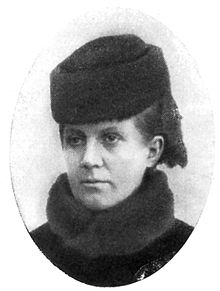
The experience profoundly affected Dostoevsky, and in multiple ways. A letter written later the same day to his brother talks of being "reborn for the better," of pledging himself "To be a man among men, to be a man always, not to allow oneself to be broken, to fall -- this is life's goal and meaning." Not only were his outlook, his politics, his writing and his health affected (it was in the Siberian prison camp that Dostoevsky had his first epileptic fit), but even his love life. In Dostoevsky: Reminiscences, Anna Dostoevsky tells the story of being hired by Dostoevsky in 1866 to take the dictation of his new novel, The Gambler -- she a twenty-two-year-old stenographer on her first job, the author forty-eight and already famous for Crime and Punishment. On the first day she found him so stern and sour that she was tempted to quit; on day two, over tea and pears, he told the tale of his mock-execution in such a way that "I could feel the gooseflesh crawling along my skin"; a month later she accepted his proposal of marriage.
 

Wednesday, July 6, 2016

Sir Thomas More

On this day in 1535, Sir Thomas More was beheaded, his punishment for refusing to swear an oath making Henry VIII head of the Church of England, and husband of as many as he pleased. For his learning, wit and good government, More has become the portrait of Humanism; the actual Holbein portrait of him, now part of the Frick Collection in New York, is one of the most famous images of the English Renaissance, as his Utopia is one of its essential texts. More's last days are known to many through Robert Bolt's 1960 play, A Man For All Seasons -- the title comes from a description of More by his friend, and another giant of the era, Erasmus.

More's last letter, written in charcoal from the Tower on the eve of his execution, is to his daughter Margaret Roper, and has little irony.
    . . . I cumber you, good Margaret, much, but I would be sorry if it should be any longer than to-morrow, for it is St. Thomas's even, and the utas of St. Peter; and therefore, to-morrow long I to go to God. It were a day very meet and convenient for me.

    I never liked your manner towards me better than when you kissed me last; for I love when daughterly love and dear charity hath no leisure to look to worldly courtesy. Farewell, my dear child, and pray for me, and I shall for you and all your friends, that we may merrily meet in heaven. I thank you for your great cost. . . .
The occasion "when you kissed me last" was four days previous, as More was being transported back to the Tower after his conviction and sentencing. Margaret had pushed through the onlookers and through the pikes and halberds of the encircling guards to hug him, and then after leaving had rushed back to kiss again, before being separated. Such defiance of authority and convention won the daughter the father's highest and last praise. Margaret got More's hair shirt with the letter; on her own she managed to retrieve his head from its pole on London Bridge.
(From Steve King)