Sunday, July 12, 2020

Sunday/The Sower


                                      Sunday/The Sower

Today's is the gospel of the sower. These rural parables have a georgic quality, the practical set on a larger and natural law.
Georgic is defined as a poem dealing with practical aspects of agriculture and rural affairs. The model for such verse in postclassical literature was Virgil’s Georgica, itself modeled on a now lost Geōrgika (Greek: “agricultural things”) by the 2nd-century BC Greek poet Nicander of Colophon.
Olivia Butler has two novels, The Parable of the Sower and The Parable of the Talents in which she offers a Darwinian religion based upon the foundation of the universe: Change.

Putting in the Seed

Robert Frost - 1874-1963
You come to fetch me from my work to-night 
When supper's on the table, and we'll see 
If I can leave off burying the white 
Soft petals fallen from the apple tree. 
(Soft petals, yes, but not so barren quite, 
Mingled with these, smooth bean and wrinkled pea;) 
And go along with you ere you lose sight 
Of what you came for and become like me, 
Slave to a springtime passion for the earth. 
How Love burns through the Putting in the Seed 
On through the watching for that early birth 
When, just as the soil tarnishes with weed, 
The sturdy seedling with arched body comes 
Shouldering its way and shedding the earth crumbs.

Saturday, July 11, 2020

Some Stats


I received a call on my cell that said that my social security account was suspended and that I needed to call a number to get it clarified. Of course, I hung up. We are being taught to believe nothing.

                                        Some Stats


Portion of High School Graduates Aged 16�24 Enrolled In College


Among high school students who graduated in 2018 and took the ACT college readiness exam, the following racial/ethnic groups met ACT’s college readiness benchmarks in at least three of the four subjects:
  • Asian – 62%
  • White – 48%
  • Pacific Islander – 24%
  • Hispanic – 22%
  • American Indian – 14%
  • African American – 11%[171]


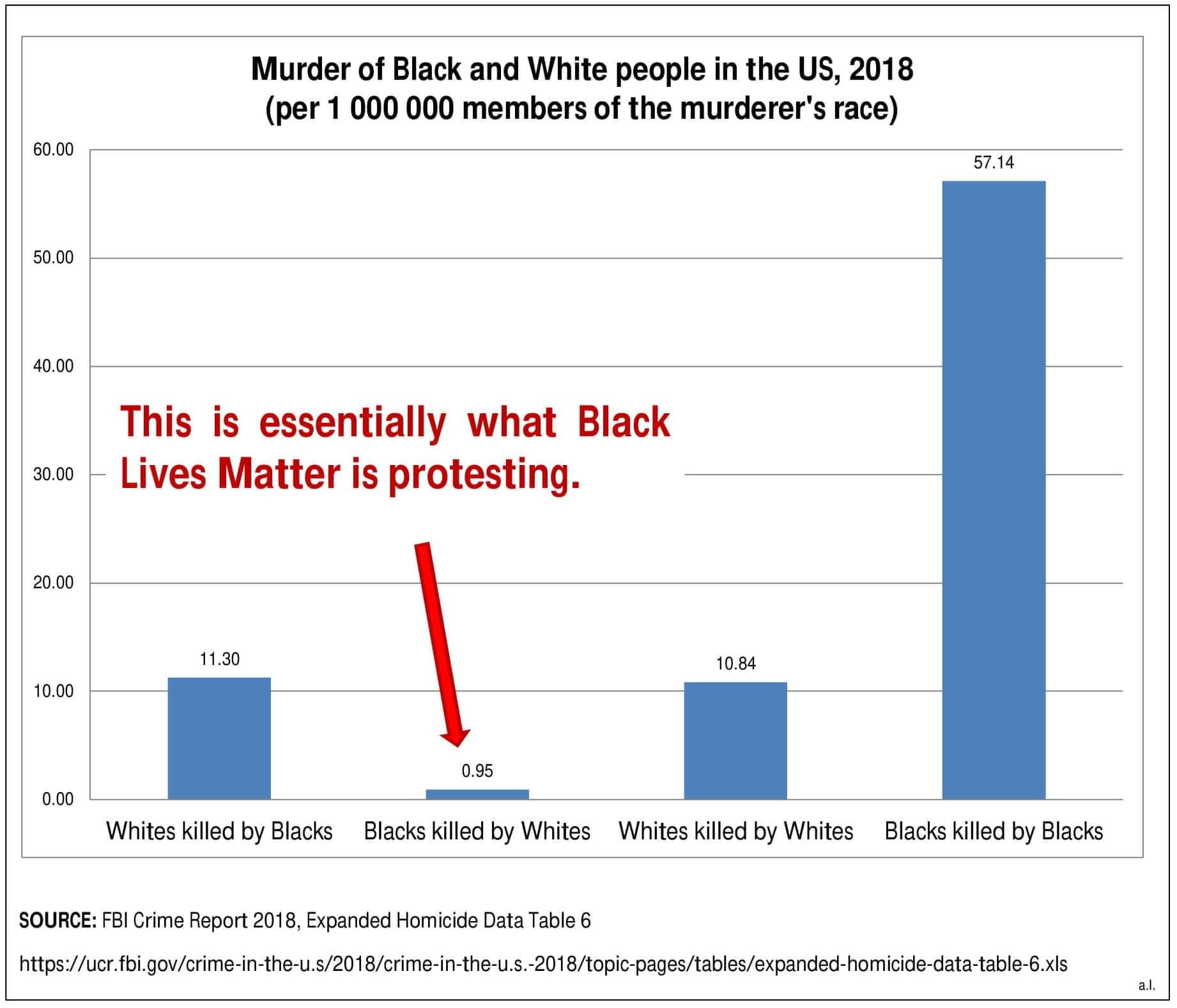
This graph is a bit distorted by an editorial comment that isn't actually true, but...


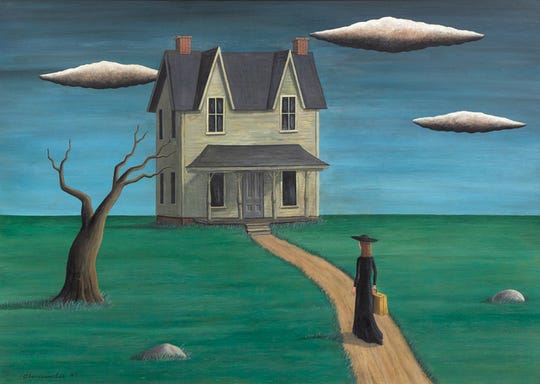
"Coming Home," purportedly by Gertrude Abercrombie, sold at action for $93,750 last year. The FBI is investigating it as a fake painting  created in the style of Abercrombie.
"Coming Home," purportedly by Gertrude Abercrombie, sold at action for $93,750 last year. The FBI is investigating it as a fake painting created in the style of Abercrombie. (Photo: Artnet)


 In the 2016–17 school year, public 4-year colleges spent an average of $44,965 per full-time-equivalent student. For other types of colleges, spending per student varied as follows:
Control of Institution[198]
4-Year Colleges
2-Year Colleges
Public
$44,965
$16,512
Private Nonprofit
$58,794
$21,124
Private For-Profit
$16,510
$17,958

Friday, July 10, 2020

Genetic Variation and Strain


The Steele Dossier prompts an important question: To what lengths will a politician go to advance himself? What is beneath a politician?


                            Genetic Variation and Strain

A reader of Cowen offers two theories on the virus and its variable behavior:

1. Genetic variation

This means variation in the genetics of people (not the virus). We already know that (a) mutation in single genes can lead to extreme susceptibility to other infections, e.g Epstein–Barr (usually harmless but sometimes severe), tuberculosis; (b) mutation in many genes can cause disease susceptibility to vary — diabetes, heart disease are two examples, which is why when you go to the doctor you are asked if you have a family history of these.

It is unlikely that COVID was type (a), but it’s quite likely that COVID is type (b). In other words, I expect that there are a certain set of genes which (if you have the “wrong” variants) pre-dispose you to have a severe case of COVID, another set of genes which (if you have the “wrong” variants) predispose you to have a mild case, and if you’re lucky enough to have the right variants of these you are most likely going to get a mild or asymptomatic case

2. Strain

It’s now mostly accepted that there are two “strains” of COVID, that the second arose in late January and contains a spike protein variant that wasn’t present in the original ancestral strain, and that this new strain (“D614G”) now represents ~97% of new isolates. The Sabeti lab (Harvard) paper from a couple of days ago is a good summary of the evidence
. https://www.biorxiv.org/content/10.1101/2020.07.04.187757v1

— note that in cell cultures it is 3-9x more infective than the ancestral strain. Unlikely to be that big of a difference in humans for various reasons, but still striking/interesting.

Almost nobody was talking about this for months, and only recently was there any mainstream coverage of this. You’ve already covered it, so I won’t belabor the point.

So could this explain Asia/hetereogeneities? We don’t know the answer, and indeed it is extremely hard to figure out the answer (because as you note each country had different policies, chance plays a role, there are simply too many factors overall).

Thursday, July 9, 2020

History Snare


The basic thing that Malcolm X wanted, the creation of a history to support the growth of the Black man, is the very thing the current protests are opposing. The attack on culture and history is the hallmark of the totalitarian, from Nazi and Stalin to Pol Pot.


                                        History Snare

In Balkan Ghosts, the author, on a tour of the Balkans, meets an elderly woman who cares for an old local church. She gives him a tour and he is surprised at the unusual and beautiful art in the church. She explains it is unique to the region and the style would have dominated the Renaissance had the country only not lost the Battle of the Field of Blackbirds. She was still embittered. 
The battle was in 1389.
Cultures should grow in history, not live in it. On the other hand, banning it doesn't work either.

Wednesday, July 8, 2020

Transformation


One wonders how the behavior of institutions effect social thinking. Clearly our leaders are mendacious and inept. But what must be implanted in the minds of people when they see the likes of O.J., Robert Blake, Jon Benet, and Epstein come to such clearly unjust conclusions. Does that scar the civic sensibility?


                                       Transformation

First two paragraphs of an article in the WSJ by Gerard Baker exclaiming the sudden change in America's fortunes:

At the end of the 20th century, the U.S. had won World War II and the Cold War, liberated half the planet from history’s most dehumanizing ideologies, advanced a free-market capitalism that had led more humans out of poverty than any economic system ever devised, and given the world the richest bounty of intellectual, cultural and scientific capital since the Enlightenment. Americans could—and did—look at themselves and the nation they had built with immense pride.

Twenty years later much of the country’s political leadership, almost its entire academic establishment, most of the people who control its news and cultural output, and a good deal of its corporate elite view America as an irredeemably malignant force for enslavement and oppression, a uniquely evil power founded on an ideology of racial supremacy. These Jacobins demand that Americans repudiate most of the nation’s history, tear down the icons of its creation, and engage in a cultural expurgation of its sins.

And the final explanation:

This country hasn’t passed from great to evil in two decades. America hasn’t failed. But Americans have been failed—misled by inept and deceitful political leaders, deserted by predatory and mercenary corporate chiefs, and, above all, betrayed by a parasitic cultural elite that exploited American freedom to trash the country. It isn’t America’s history that needs to be repudiated. It’s its present.


Tuesday, July 7, 2020

Churchill on Socialism


If the street disorders depend upon generating opposition to the world's first established democracy, they should lose. If they win, the best philosophical governmental creation in history could not support itself; that would be a disaster for the very concept of freedom in the future.


                           Churchill on Socialism

From Winston Churchill’s first election broadcast on June 4, 1945:

....there can be no doubt that Socialism is inseparably interwoven with Totalitarianism and the abject worship of the State. …liberty, in all its forms is challenged by the fundamental conceptions of Socialism. …there is to be one State to which all are to be obedient in every act of their lives. This State is to be the arch-employer, the arch-planner, the arch-administrator and ruler, and the arch-caucus boss.

A Socialist State once thoroughly completed in all its details and aspects… could not afford opposition. Socialism is, in its essence, an attack upon the right of the ordinary man or woman to breathe freely without having a harsh, clumsy tyrannical hand clapped across their mouths and nostrils.

But I will go farther. I declare to you, from the bottom of my heart that no Socialist system can be established without a political police. Many of those who are advocating Socialism or voting Socialist today will be horrified at this idea. That is because they are shortsighted, that is because they do not see where their theories are leading them.

No Socialist Government conducting the entire life and industry of the country could afford to allow free, sharp, or violently-worded expressions of public discontent. They would have to fall back on some form of Gestapo, no doubt very humanely directed in the first instance.

And this would nip opinion in the bud; it would stop criticism as it reared its head, and it would gather all the power to the supreme party and the party leaders, rising like stately pinnacles above their vast bureaucracies of Civil servants, no longer servants and no longer civil. And where would the ordinary simple folk—the common people, as they like to call them in America—where would they be, once this mighty organism had got them in its grip?

Monday, July 6, 2020

A Posthumous Interview with Mencken


Remove police presence? Maybe hire Mexican cops.


                    A Posthumous Interview with Mencken


Now, when we are warmed by our confidence in government and their benign practitioners and experts, is the time to start recall the observation of H. L. Mencken.

Now, in the grip of The Virus, surely we can rely on the best instincts and judgments of our leaders.

Mencken “What is a political campaign save a concerted effort to turn out a set of politicians who are admittedly bad and put in a set who are thought to be better. The former assumption, I believe, is always sound; the latter is just as certainly false. For if experience teaches us anything at all it teaches us this: that a good politician, under democracy, is quite as unthinkable as an honest burglar. His very existence, indeed, is a standing subversion of the public good in every rational sense. He is not one who serves the common weal; he is simply one who preys upon the commonwealth. It is to the interest of all the rest of us to hold down his powers to an irreducible minimum and to reduce his compensation to nothing; it is to his interest to augment his powers at all hazards, and to make his compensation all the traffic will bear.”

So should we believe that the political wars will yield a capable peoples' champion?

Mencken: “The only way to success in American public life lies in flattering and kowtowing to the mob. A candidate for office, even the highest, must either adopt its current manias en bloc or convince it hypocritically that he has done so while cherishing reservations in petto . The result is that only two sorts of men stand any chance whatever of getting into actual control of affairs — first, glorified mob-men who genuinely believe what the mob believes, and secondly, shrewd fellows who are willing to make any sacrifice of conviction and self-respect in order to hold their jobs.”

But what about those politicians who promise "change?"

Mencken: “Politics, as hopeful men practice it in the world, consists mainly of the delusion that a change in form is a change in substance.” And, “Reformers and professionals are alike politicians in search of jobs; both are trying to bilk the taxpayers. Neither ever has any other motive. If any genuinely honest and altruistic politician had come to the surface in America in my time I’d have heard of him, for I have always frequented newspaper offices, and in a newspaper office, the news of such a marvel would cause a dreadful tumult. I can recall no such tumult.”

Shouldn't our government be revered?

Mencken saw “the survival into our enlightened age of a concept hatched in the black days of absolutism — the concept, to wit, that government is something that is superior to and quite distinct from all other human institutions — that it is, in essence, not a mere organization of ordinary men, like the Ku Klux Klan, the United States Steel Corporation or Columbia University, but a transcendental organism composed of aloof and impersonal powers, devoid wholly of self-interest and not to be measured by merely human standards.”

So how is the government, any government, special?

“When we say that (government) has decided to do this or that, that it proposes or aspires to do this or that — usually to the great cost and inconvenience of nine-tenths of us — we simply say that a definite man or group of men has decided to do it, or proposes or aspires to do it; and when we examine this group of men realistically we almost invariably find that it is composed of individuals who are not only not superior to the general, but plainly and depressingly inferior, both in common sense and in common decency.”

(a takeoff of an old Bordeaux article)